Living in Rome as an American: Cost, Neighborhoods, Pros and Cons
My First Honest Impression of Rome
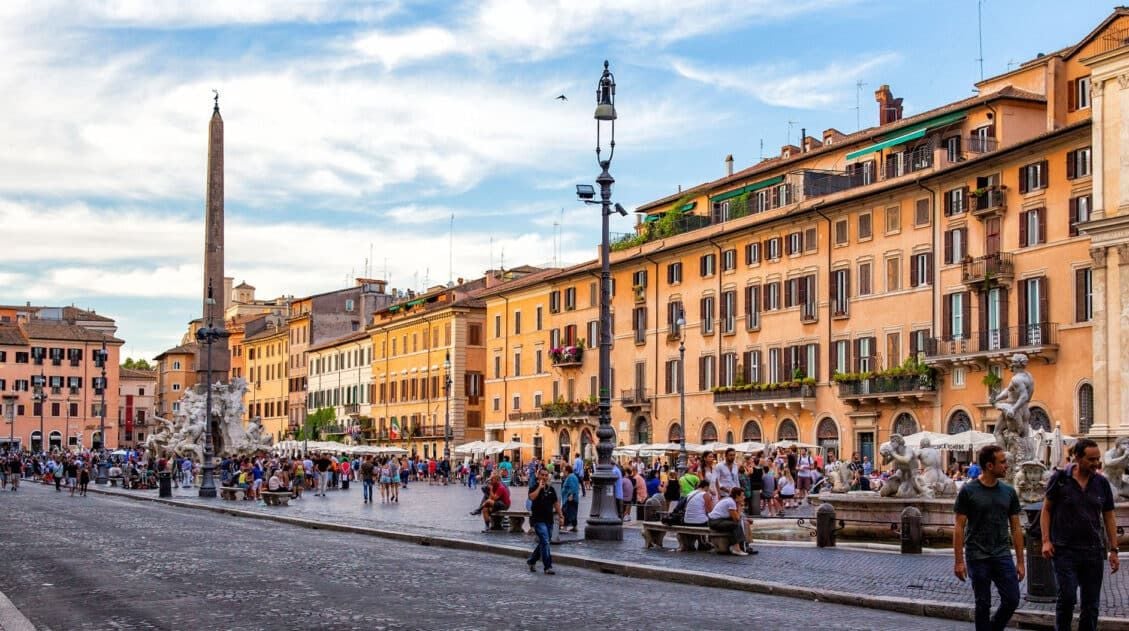
What surprised me about Rome is how thick daily life is. From an American point of view, you walk out the door and your routine is layered against 2,500 years of city — fragments of ancient walls embedded in apartment buildings, a Bernini fountain on the way to the supermarket, a 14th-century church across from your dentist. None of this is curated. It's just the texture of the place. You stop photographing it after the first month and start ignoring it the way you used to ignore strip malls back home. That's when you actually live here.
But Rome is not a fantasy you walk into. Italy's capital sits in the Lazio region in central-western Italy, with a substantial foreign-resident population — Roma Capitale statistics show foreign nationals at around 14% of residents, with higher shares in central areas like Municipio I. The international community is real but more diffuse and less concentrated than in, say, Lisbon or Berlin. And the city operates on a logic that is fundamentally not American. Buses run late or don't run. The metro covers a fraction of what New York's or Madrid's does. Stores close for two-hour lunch breaks. The post office is an event, not an errand. In August, much of the city physically empties as Romans head to the coast or the mountains.
The adjustment many Americans will feel first is that Rome does not optimize for speed. It optimizes for the meal, the conversation, the relationship, the figura (the impression you make). If you're coming from a U.S. city where everything works because everything must work, the friction is real. If you can release the need for everything to function on your schedule, the texture of daily life is genuinely unmatched in Europe.
The honest first impression: Rome is one of the most rewarding European cities to live in for the right person — and one of the most exhausting for the wrong one. Knowing which one you are before you sign the lease matters more here than in most cities.
What Daily Life in Rome Actually Feels Like
Daily life in Rome is built around your neighborhood, your bar (in the Italian sense — your morning espresso spot), your mercato, and the fact that walking through history is just walking. Coming from a U.S. city, what may surprise you most is how quickly your radius compresses. People don't crisscross Rome the way New Yorkers move through Manhattan. They live in a 15- or 20-minute walk and a handful of bus or metro stops, and they make that small territory unusually deep.
Walking through history is structurally part of routine. From an American point of view, this can sound precious until you've done it for six months and realize that yes, you do route past the Pantheon to grab coffee, and yes, that's just Tuesday. The flip side: central Rome (Centro Storico, Trastevere, the area around the Pantheon, the Spanish Steps) is so saturated with tourism that it's often easier to live in a neighborhood next to the famous parts rather than inside them.
Bars and mercati are the daily structure. The Italian "bar" is the corner café where you stand at the counter for a €1.20 espresso and chat for thirty seconds — it's not a Brooklyn-style coffee shop. Markets like Testaccio's Mercato or Mercato Trionfale (in Prati) are real working markets, not curated tourist experiences, and they restructure how you shop. Many Americans within a month default to buying produce, meat, and fish at the mercato and using supermarkets only for boxed goods.
Service culture is slower and more relational than U.S. norms. From an American point of view, the adjustment isn't that service is "bad" — it's that "fast" isn't the value being optimized for. Lunch is a real break. Dinner is unhurried. Waiters won't bring the check until you ask. Taking offense at this is the surest sign of a newcomer.
Transport friction is the daily-life issue that Americans most consistently underestimate. ATAC operates metro lines A, B, and C, the Roma–Giardinetti railway, plus a dense bus and tram network. It is genuinely useful for parts of the city and genuinely unreliable in others. Buses arrive when they arrive. The metro covers less ground than it should because excavating new lines hits Roman archaeology, which is to say it hits the bedrock of the city. Plan accordingly. Many Americans walk far more than they did at home and take far more taxis than they expected.
Tourism pressure in central neighborhoods (Centro Storico, Trastevere, the area around the Trevi Fountain and Spanish Steps) is constant from spring through fall. Living in those neighborhoods means accepting it as the background of daily life — rolling suitcases at 7 a.m., tour groups at lunch, restaurants priced for visitors. Many long-term Americans live one neighborhood out and benefit from the calm.
The Roman August is its own phenomenon. Real Romans leave. Many shops, restaurants, and services close for two to three weeks. The city is hot, slow, and (for those who stay) oddly atmospheric. Plan around it for your first year.
The frustrations stack up: the Anagrafe (registry) appointment that takes three months to schedule, the codice fiscale that requires a separate trip, the package delivery that doesn't quite happen, the bus that doesn't quite arrive, the apartment heating that doesn't quite reach the corners in February. None of this is unsolvable. All of it is normal.
Cost of Living in Rome for Americans
Rome is cheaper than Milan, Paris, London, New York, or San Francisco — but it's not automatically "cheap," especially in central neighborhoods. Treat the ranges below as approximate and verify against current listings before you commit.
Solo American remote worker budget
A solo American renting a one-bedroom in a central or near-central neighborhood, using public transport, eating out several times a week, and going out socially typically lands in the €1,800–€2,800 per month range. Central neighborhoods (Centro Storico, Monti, Trastevere, Prati) push the upper end; more residential neighborhoods (Garbatella, parts of Monteverde, Ostiense) sit lower.
Couple budget
Couples in a one-bedroom or small two-bedroom usually run €2,500–€4,000 per month, with rent doing most of the work. Splitting fixed costs improves per-person math; Rome's rental market doesn't punish couples as hard as Paris's or London's.
Family budget
A family with one or two children needing a real two- or three-bedroom apartment, with private health insurance, occasional eating out, and modest travel, generally lands €3,500–€6,500+ per month. Parioli, Monteverde, and the calmer parts of Prati and Garbatella are typical family choices. International schools (St. Stephen's, Marymount, the American Overseas School of Rome, the Ambrit International School) can add a substantial line item.
What usually costs more than Americans expect
Furnished rentals in central neighborhoods: convenience commands a real premium.
Air conditioning: many older buildings lack proper systems; summer retrofits aren't cheap or trivial.
Heating in winter: gas bills in older apartments add up, and heating is often time-restricted by building rules (centralized heating systems run on schedules).
Bureaucratic friction costs: codice fiscale appointments, sworn translations, document apostilles, sometimes a commercialista (Italian accountant) for visa or tax reasons.
Imported groceries: U.S.-style peanut butter, ranch, certain cereals, decent maple syrup.
International school tuition: comparable to mid-tier U.S. private schools.
Where Americans may save money compared with U.S. cities
Eating out: a trattoria pasta is often €10–€14; a full meal with wine in a neighborhood spot runs €25–€35 per person.
Coffee and casual food: espresso at the counter is €1.10–€1.50.
Public transport: a monthly ATAC pass is dramatically cheaper than U.S. car ownership.
Healthcare: even private insurance for healthy adults is typically a fraction of U.S. premiums.
Produce and basics at the mercato: high-quality at fair prices.
Travel: budget airlines from Fiumicino and Ciampino plus high-speed Italian rail (Trenitalia Frecce, Italo) make weekends across Italy and Europe genuinely affordable.
Phone and internet: fiber + mobile bundles often €30–€50 per month combined.
Why neighborhood choice matters more than city averages
The same euros buy radically different lives in different parts of Rome. €1,400/month rents a small studio in Centro Storico, a real one-bedroom in Prati, a comfortable two-bedroom in Garbatella, and something larger in Monteverde or San Lorenzo. Neighborhood choice does most of the work — both for cost and for whether daily life feels like "Rome the city" or "Rome the tourist set." More on this below.
Best Neighborhoods in Rome for Americans and Expats
Prati
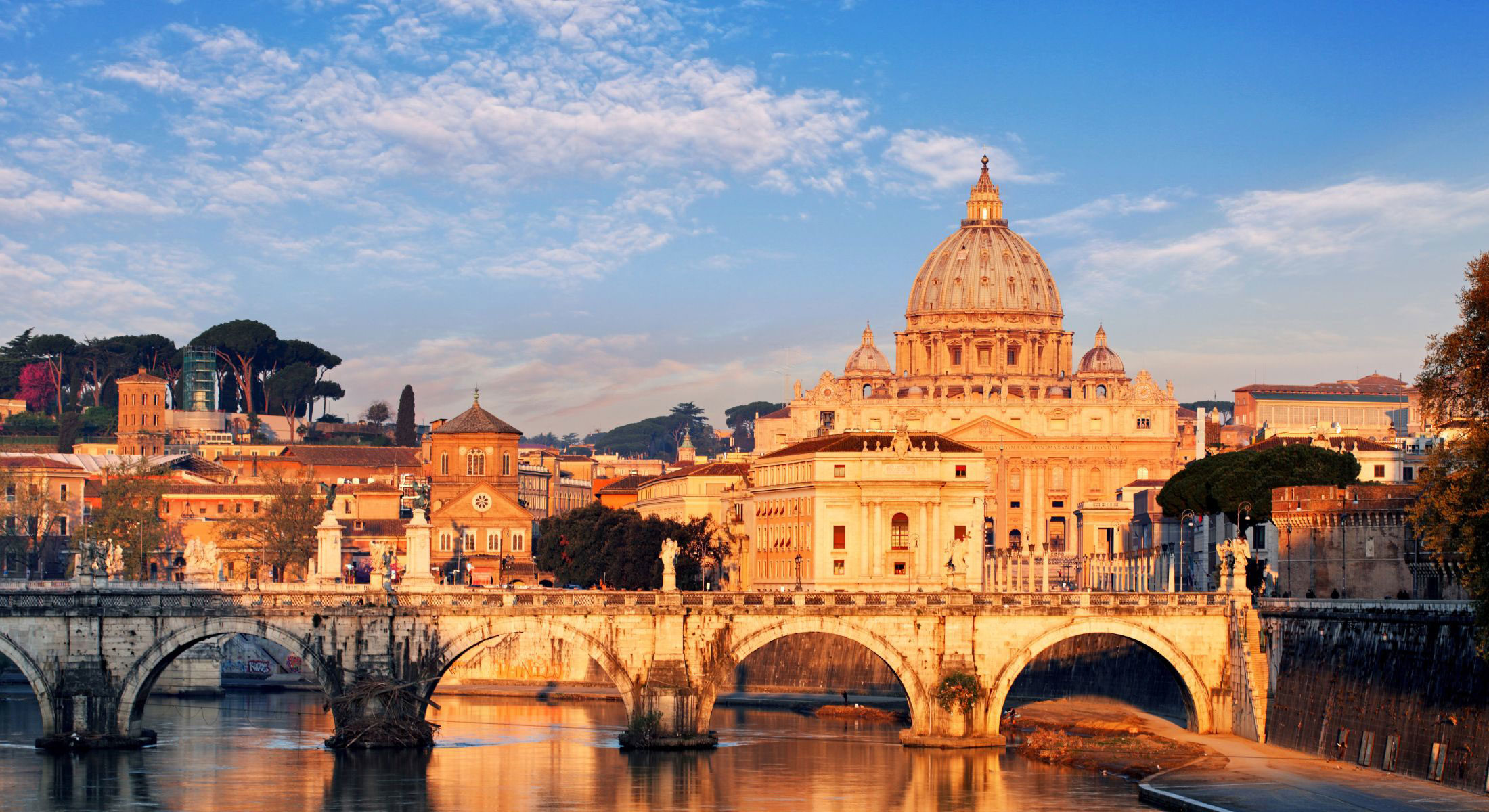
Vibe: Polished, residential, orderly grid (rare in Rome), close to the Vatican, strong cafés and shopping along Via Cola di Rienzo. Cost: Mid-to-high. Who it suits: American professionals and couples who want calm, organized daily life with central access. A common landing zone for first-time American arrivals. Tradeoff: Less of the chaotic-Rome character; some find it almost too tidy.
Trastevere
Vibe: Atmospheric, social, narrow cobblestoned streets, ivy-covered facades, nightlife-heavy, one of the most photogenic parts of Rome. Cost: Mid-to-high; varies by sub-area. Who it suits: Americans who want to live inside the iconic Rome, with bars and restaurants on the doorstep. Tradeoff: Touristed and noisy, especially Thursday through Sunday nights. Apartments are often small and old. Walk the street at night before signing.
Monti
Vibe: Central, stylish, food-and-cocktail-driven, steps from the Colosseum and the historic center but with a real neighborhood feel. Cost: Mid-to-high. Who it suits: Americans who want central location with character — designers, creatives, food-driven professionals. Tradeoff: Tourist density rises sharply on weekends; rents have moved up fast.
Testaccio
Vibe: Traditional Roman, food-focused, anchored by the Testaccio Mercato and a strong working-class history. Off the main tourist track. Cost: Mid. Who it suits: Americans who want "real Rome" daily life — strong food culture, neighborhood identity, less polish than Prati. Tradeoff: Less central than it feels; some streets feel rougher than others.
Garbatella
Vibe: Residential, community-feel, distinctive 1920s architecture, less touristy. Often described as one of Rome's most underrated livable neighborhoods. Cost: Mid; lower than central options. Who it suits: Americans who want long-term residential Rome — families, remote workers wanting calm, anyone tired of tourist friction. Tradeoff: Farther from central job hubs; metro B helps but the connection isn't instant to everywhere.
Centro Storico
Vibe: The historic core — Pantheon, Piazza Navona, Campo de' Fiori, narrow medieval streets. Cost: Very high. Who it suits: Americans with the budget and the desire to live inside the postcard. Tradeoff: Permanent tourism pressure, expensive, small apartments, often noisy. Most long-term residents find one neighborhood out gives better daily life.
Pigneto
Vibe: Creative, younger, nightlife and alternative scene, edgier feel, has gentrified in the past decade. Cost: Mid; lower than central options. Who it suits: Americans in their 20s and 30s wanting Rome with a Berlin-adjacent feel — artists, writers, designers. Tradeoff: Can feel rougher block by block; transport varies; tourism is minimal but local character is intense.
San Lorenzo
Vibe: Student energy from the nearby Sapienza University, nightlife, cheaper feel, gritty, lively. Cost: Lower end of the central core. Who it suits: Graduate students, Americans on tighter budgets, those who want energy without polish. Tradeoff: Noisy, not always tidy, can feel uneven.
Monteverde
Vibe: Greener, residential, hilltop, family-friendly, near the large Villa Pamphili park. Cost: Mid. Who it suits: Families, Americans who want space and calm at lower rent than Parioli. Tradeoff: Farther from central life; commute matters more.
Parioli
Vibe: Upscale, quiet, residential, traditionally affluent, near the Villa Borghese. Cost: High. Who it suits: Higher-earning Americans, families wanting quiet residential prestige. Tradeoff: Can feel sleepy at night; more car-dependent than central neighborhoods; less spontaneous social life.
EUR
Vibe: Modern, organized, business and residential, built in the 1930s-40s, very different from historic Rome — wider streets, modernist architecture, less density. Cost: Mid; varies by sub-area. Who it suits: Americans working at companies based in EUR, families wanting newer apartments, those who actively want a non-historic Rome feel. Tradeoff: Doesn't feel like "Rome" in the traditional sense; far from the center.
Ostiense
Vibe: Practical, transit-connected (metro B), food and nightlife pockets (around Via Ostiense and the Garbatella border), industrial-residential mix, changing fast. Cost: Mid. Who it suits: Americans who want connectivity, urban energy, and rent that's not Centro Storico-level. Tradeoff: Some areas feel less polished than others.
For most first-time American arrivals, the practical defaults are Prati, Monti, or Trastevere depending on whether your priority is calm, character, or atmosphere. Garbatella and Monteverde are the smart longer-term picks once you know how the city actually works.
Housing Reality in Rome
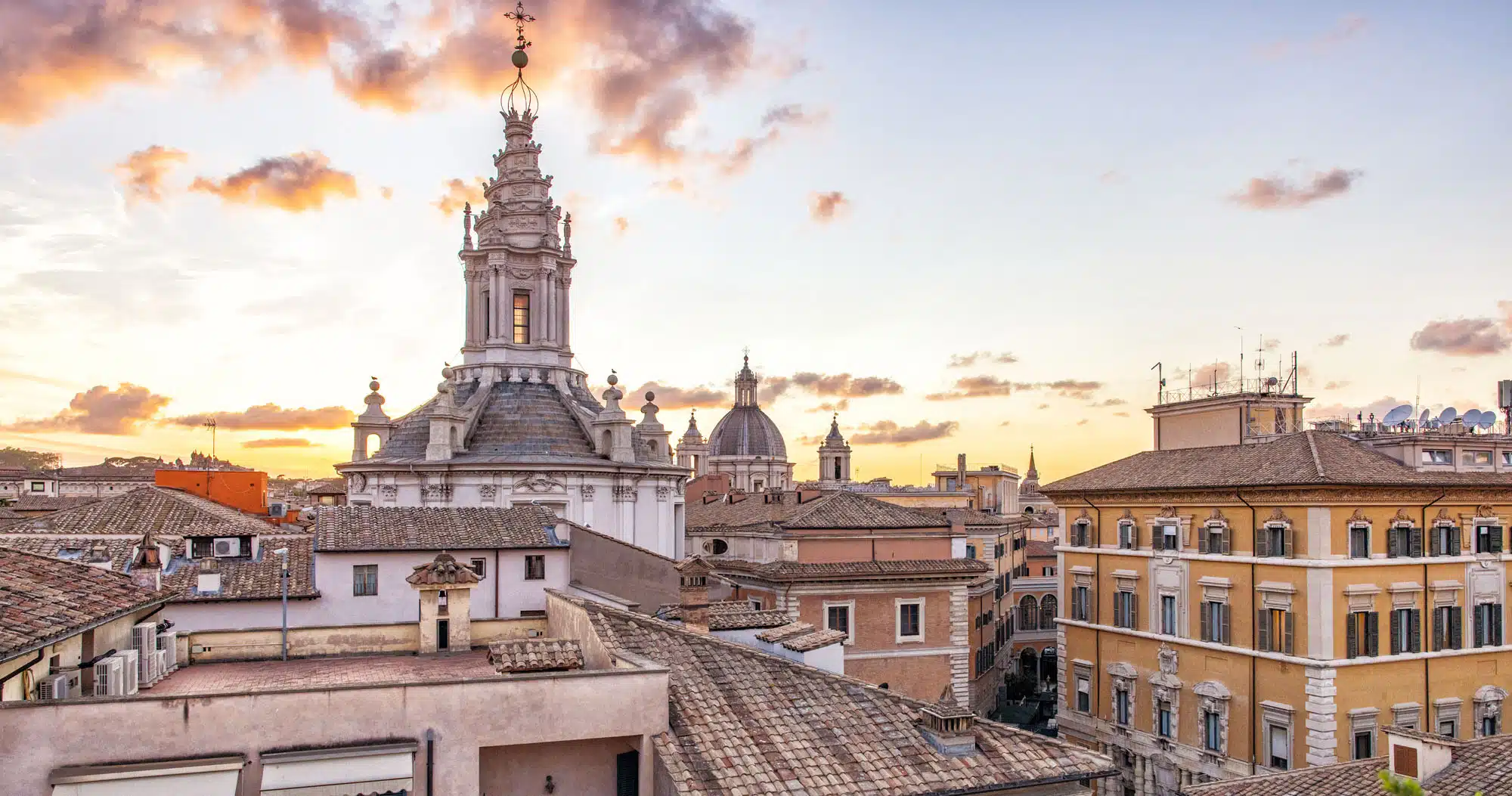
Housing in Rome is less about finding the most beautiful neighborhood and more about matching daily-life practicality with budget, transport, tolerance for noise and tourists, and apartment quality. The "beautiful old palazzo" you're picturing may have no working elevator, no real heating, no AC, a fifth-floor walkup, and a kitchen built in 1962. All of those things are normal. They're tradeoffs, not problems — but newcomers should know what they're choosing.
Apartments are generally smaller than U.S. norms, though larger than Parisian or central London ones. A "spacious" central one-bedroom is typically 50–70 m² (about 540–750 sq ft). Outside the historic core, you can find more space for less. Roman buildings are usually old, with stone and tile floors that stay cool in summer and cold in winter.
Furnished (arredato) vs unfurnished (non arredato) is the same call as elsewhere in Europe. Furnished is faster and easier for new arrivals but rents at a real premium. Unfurnished is cheaper but expects you to furnish entirely. "Partially furnished" (semi-arredato) is also common and usually means kitchen appliances plus some basics.
Rental paperwork is real. You'll typically need:
A codice fiscale (Italian tax ID — essentially required for almost everything in Italy)
Proof of income (often three to four times the monthly rent)
A deposit of one to three months
A registered contract with the Agenzia delle Entrate (which provides legal protections — make sure the contract is registered, not "in nero")
Sometimes a guarantor or additional rent paid up front
Short-term rental pressure in central neighborhoods (Centro Storico, Trastevere, Monti) is real. Many apartments that should be long-term housing have been pulled into the Airbnb market, contributing to rent rises in those areas. As of 2024, Italy has been moving toward tighter regulation of short-term rentals (the Codice Identificativo Nazionale for short-term rentals), but the pressure on long-term housing remains.
Older buildings come with their own pattern of issues. Centralized heating systems that run on building-wide schedules rather than your thermostat. Plumbing that surprises you. Electricity systems sized for a much earlier century. Elevators that work most days. The romantic stone palazzo and the maintenance nightmare are often the same building.
The most common American mistake: prioritizing the photographic neighborhood over the practical apartment. Walk the building. Walk the street at night. Check elevator, heating, AC, water pressure, and natural light. Don't sign blind. And register your residence at the Anagrafe within the required window after your move — it matters for residency, healthcare, and most administrative steps.
Remote Work, Internet, and Everyday Convenience
For American remote workers, Rome can work — but the picture is more mixed than it is in Madrid, Lisbon, or Lyon.
Visa-wise, Italy now has a real Digital Nomad / Remote Worker Visa for non-EU citizens, operational since 2024. It's intended for highly qualified remote workers — freelancers, consultants, employees of foreign companies — who can demonstrate at least six months of prior remote-work experience, sufficient income (recent guidance points to a minimum around €28,000–30,000 net per year, based on three times the threshold for Italian healthcare contribution exemption, though specific figures and consulate practices vary), comprehensive health insurance (minimum €30,000 coverage), proof of accommodation in Italy, and relevant qualifications. The visa is initially valid for one year, renewable, and crucially is not automatic — consulate-level scrutiny is real and documentation requirements are strict. Verify current requirements with the relevant Italian consulate before assuming eligibility — this is not legal advice.
If you have the right legal status, the day-to-day mechanics are solid. Fiber internet is widely available in Rome, with major providers (TIM, Vodafone, Fastweb, WindTre) offering fast plans bundled with mobile typically in the €25–€45 per month range. Cell coverage is strong.
Coworking is growing — Talent Garden, Cowo, LVenture Group, Spaces, and a long list of independents cluster in Prati, Ostiense, Monti, and around Termini. Day passes typically run €15–€25; monthly memberships €150–€350 for serious spaces.
Cafés are not laptop battlegrounds in the Brooklyn or Berlin sense. The Italian "bar" is for quick espresso and conversation, not for occupying a four-top for three hours with one cortado. Some Monti and Prati spots tolerate work; traditional Roman bars do not. Read the room.
Time zone tradeoffs are the same as anywhere in Europe: 6 hours ahead of New York, 9 ahead of San Francisco. East Coast clients map onto Roman afternoons; West Coast clients mean evening calls.
Daily errands are smooth once you've sorted out the codice fiscale, the bank account, and the residence registration. Mercati for produce. Supermarkets (Conad, Coop, Carrefour, Esselunga) for staples. Glovo and Deliveroo for restaurant delivery. Amazon Italy works. Postal services are slower than U.S. norms.
Healthcare and Everyday Services
Italy's healthcare system (the Servizio Sanitario Nazionale / SSN) consistently ranks well by international indicators and is one of the genuine quality-of-life upgrades Americans get from moving here. But access isn't automatic, and Americans need to understand the structure before assuming they can walk into a clinic.
Public healthcare access in Italy is tied to legal residence and registration with the SSN. Foreign residents typically register at the local ASL (Azienda Sanitaria Locale) office once they have their residence permit (permesso di soggiorno) and residency confirmation. Registration produces a Tessera Sanitaria (health card), which is what gives you access to GPs (medico di base), specialists, and hospital care.
For Americans on the Digital Nomad / Remote Worker Visa, comprehensive private health insurance with minimum €30,000 coverage is required for the visa itself and during the initial period. Many Americans maintain private insurance even after SSN registration for shorter waits on specialist care and English-speaking doctors. Private insurance from Italian providers (UniSalute, Generali, Allianz, RBM) for a healthy adult typically runs €50–€150 per month, dramatically less than U.S. premiums.
Practically, most Americans run with a hybrid: SSN access for basic care once registered, private insurance for faster specialist appointments and English-speaking doctors. English-speaking practitioners are findable in Rome, especially in Prati and the area near the Vatican, and at private clinics like Salvator Mundi International Hospital or Aventino Medical Group. Pharmacies (farmacie) are excellent, well-stocked, and pharmacists are trained to advise on minor issues.
Wait times for SSN specialist appointments can be substantial in some specialties, which is part of why many residents carry supplementary private cover. This pattern is similar across many European public systems but worth understanding before you assume the SSN handles everything.