Living in Bangkok as an American: Cost, Neighborhoods, Pros and Cons
My First Honest Impression of Bangkok
What surprised me about Bangkok is how modern the daily-life infrastructure is once you're in the right neighborhood. From an American point of view, central Bangkok is closer in feel to a high-density Asian financial capital than to the chaotic-tropical-city stereotype that visitors sometimes describe. The BTS Skytrain works. The MRT works. Condos are new and well-built. Malls are excellent. Hospitals are world-class. 5G is cheap and fast. Grab, food delivery, and ride-hailing handle the rest. The first few weeks can feel almost suspiciously easy — like the city is showing you the version of itself it wants you to see.
But Bangkok is also genuinely hot, humid, traffic-heavy, and visa-dependent in a way that surprises people once they leave the polished central corridors. Outside the BTS/MRT footprint, getting anywhere can take an hour. The rainy season floods entire streets. Air quality dips in certain seasons. And the visa system, even with the new Destination Thailand Visa (DTV) operational since July 15, 2024, requires real ongoing attention — not a one-time event.
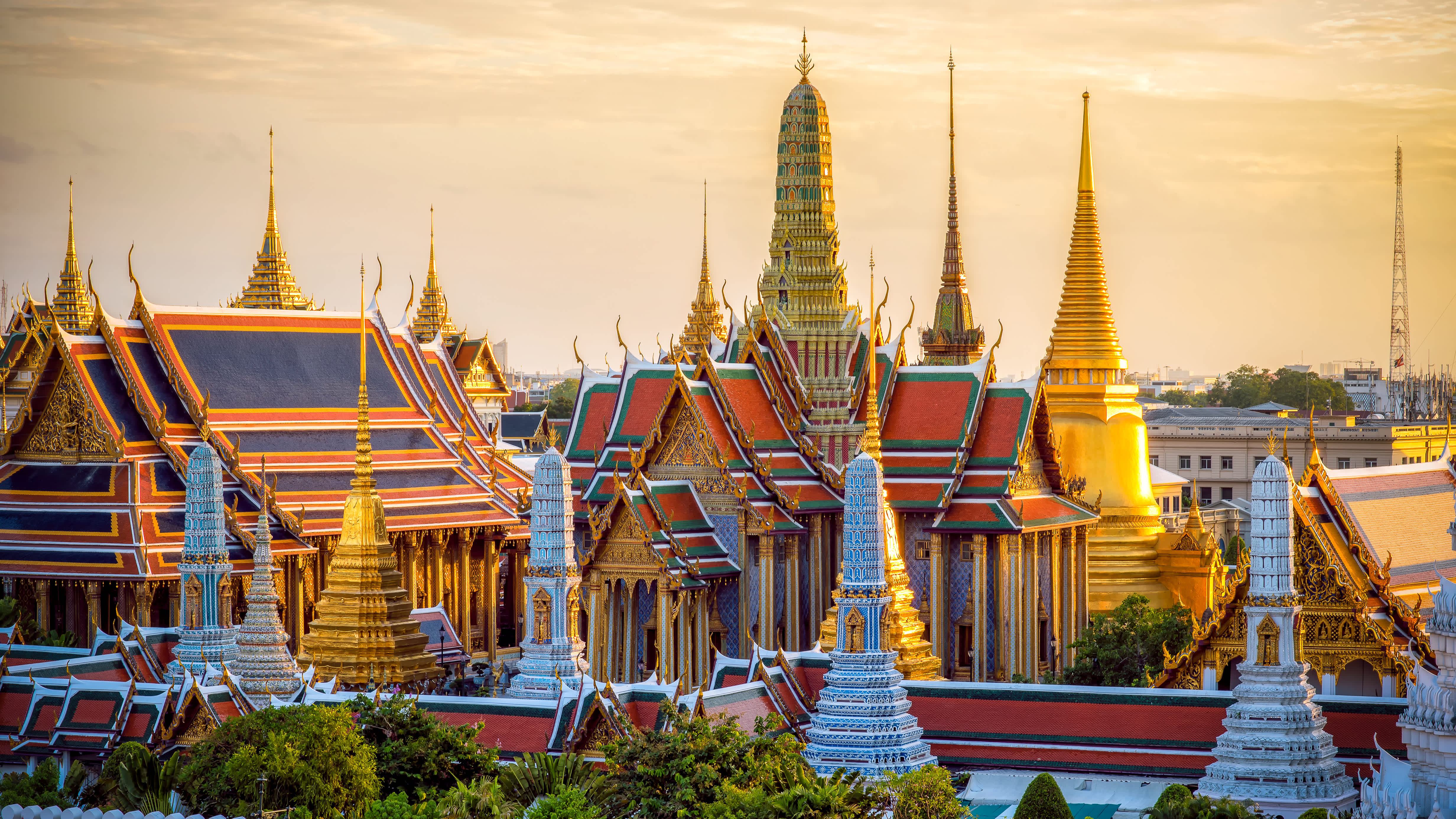
The adjustment many Americans will feel first is that Bangkok rewards specificity. It is not a city you can sample randomly and have a good experience. Living in Sukhumvit, Asoke, Phrom Phong, Thonglor, Ekkamai, Ari, or Sathorn is genuinely different from living in Lat Phrao, Bang Na, or outer Bangkok. Where you live decides your daily-life math more than almost any other choice. Bangkok is not just a cheap city. It is a city where your neighborhood, transit access, and tolerance for heat decide whether life feels exciting or exhausting.
The honest first impression: Bangkok is one of the strongest Asia bases for American remote workers, retirees, and digital nomads — but only if you understand the friction the city's cheapness can hide. Get the neighborhood, the visa, and the lifestyle math right, and Bangkok delivers something unusually generous. Get them wrong, and you're sweating in traffic three hours a day wondering why you ever left San Diego.
What Daily Life in Bangkok Actually Feels Like
Daily life in Bangkok is built around three things: your BTS or MRT station, your condo building, and the delivery and ride-hailing apps that connect everything else.
Condo-based living is the structural default for Americans in Bangkok, and it shapes everything. Most expats live in modern high-rise condos with pools, gyms, security, on-site management, and basic amenities included. These buildings are clean, air-conditioned, well-managed, and dramatically nicer than what equivalent rent gets you in U.S. cities. From an American point of view, the housing experience is the single biggest quality-of-life surprise — a one-bedroom in a good Sukhumvit building can run roughly ฿25,000–฿55,000/month (~$700–$1,550) depending on location, age, and amenities. That same rent in coastal U.S. cities buys you almost nothing.
BTS/MRT routines define how Americans move through the city. The Skytrain (BTS) and subway (MRT) are clean, reliable, frequent, and air-conditioned — but they only cover specific corridors. Living near a station is not a luxury; it's how you avoid spending two hours in traffic for a 6-kilometer trip. Many Americans pay a meaningful rent premium to be within a 5-minute walk of a station, and the math almost always works out.
Malls function as daily-life infrastructure in a way Americans don't usually expect. They're not just shopping — they're air-conditioned refuges from the heat, food-court hubs, coworking-adjacent spaces, gym locations, supermarket access, and weekend social anchors. Terminal 21, EmQuartier, EmSphere, ICONSIAM, CentralWorld, Siam Paragon — these aren't tourist destinations for residents. They're how you live in 95°F humidity.
Food is everywhere — and dramatically cheaper than Americans expect. Street food meals run ฿50–฿100 (~$1.50–$3). Food court meals run ฿80–฿150 (~$2.50–$4.50). Sit-down Thai restaurants run ฿200–฿500 (~$6–$15). Mid-tier international restaurants run ฿500–฿1,200 per person. Western-style cafés, brunch spots, and rooftop bars in Thonglor or Phrom Phong can climb to NYC pricing fast. Delivery apps (Grab Food, LINE MAN, foodpanda) make all of this accessible from your condo for small delivery fees.
Heat is the dominant environmental fact of daily life. Air conditioning is not optional. Walking long distances during the day is genuinely uncomfortable from roughly 10 a.m. to 5 p.m. for much of the year. Many Americans restructure their days around the heat — early mornings outdoors, AC during midday, evenings outside again. The "Bangkok walking lifestyle" is mostly mall-to-BTS-to-condo, not strolling boulevards.
Traffic is the second dominant fact. Outside the BTS/MRT corridor, getting anywhere by road can take staggering amounts of time during rush hour. Motorcycle taxis ("win" drivers) are how locals beat traffic; they're cheap, fast, and risky. Grab and Bolt work well but get expensive during rush hour. Many Americans simply don't go outside the BTS/MRT corridor often — and that's a deliberate strategic choice.
Social life is unusually accessible for an Asian capital. The international and remote-worker community in Bangkok is large and active — meetups, coworking events, sport leagues, dating apps, expat groups, restaurant scenes, networking events. From an American point of view, finding your people is easier here than in Tokyo, Seoul, or even Singapore.
The frustrations stack up over time. Heat and humidity that genuinely affect mood and energy. Air quality that dips during certain months. Visa compliance that requires real ongoing attention. Traffic that ruins outings. Rainy-season flooding that disrupts commutes for hours. The lifestyle inflation — cheap nightlife, easy delivery, cheap travel — that can quietly destroy your saving rate if you let it. None of this is unique to Bangkok. All of it adds up.
Cost of Living in Bangkok for Americans
Bangkok can be dramatically cheaper than New York, Los Angeles, San Francisco, London, or Singapore for many Americans — but the savings are entirely a function of your lifestyle choices. Third-party cost-of-living comparisons consistently show Bangkok significantly below major U.S. coastal cities, particularly excluding rent. That's only useful as a directional estimate; your actual cost depends on neighborhood, condo, healthcare insurance, schools, imported goods, nightlife, and travel. Treat the ranges below as approximate.
Solo American remote worker budget
A solo American on a moderate but not minimalist lifestyle — modern one-bedroom condo near BTS, mix of Thai food and Western meals, gym, occasional nightlife, ride-hailing for non-BTS trips — typically lands in the ฿60,000–฿120,000/month (~$1,700–$3,400) range. Sub-฿50,000/month is possible with stricter lifestyle choices (smaller or older condo, more Thai street food, fewer nights out, less imported goods). Above ฿150,000/month is easy with a luxury condo in Thonglor, frequent international restaurants, and a heavy social calendar.
Couple budget
Two people sharing a one-bedroom or small two-bedroom typically run ฿90,000–฿180,000/month (~$2,500–$5,000). Splitting fixed costs (rent, utilities, internet) makes the per-person math meaningfully better than solo living.
Family budget
A family with one or two kids, a real two- or three-bedroom condo or house, private health insurance, occasional eating out, and (the key variable) international school tuition typically lands in the ฿200,000–฿500,000+/month (~$5,500–$14,000+) range. International school tuition alone can run ฿500,000–฿1,000,000+/year per child at top schools — comparable to or above U.S. private school tuition. Without international schools, family budgets compress dramatically.
What usually costs more than Americans expect
International school tuition: comparable to U.S. private schools.
Imported groceries: Western brands (peanut butter, cheese, wine, specific cereals) at supermarkets like Villa Market, Tops Food Hall, or Foodland command real premiums.
Western restaurants and trendy brunch spots: NYC-comparable pricing in Thonglor, Phrom Phong, Sathorn.
Rooftop bars and Western-style nightlife: drinks at ฿300–฿500 each add up fast.
Private health insurance for older Americans: rises sharply with age and pre-existing conditions.
Luxury or large condos in Thonglor / central Sukhumvit: can rival mid-tier U.S. coastal city rent.
Visa-related costs: DTV application fees, visa runs, legal fees if you use an agency.
Cars (if you choose to buy one): import duties make cars in Thailand surprisingly expensive.
Where Americans may save money compared with U.S. cities
Thai food at any level: street, food court, sit-down trattoria-equivalents.
Modern condo rent vs. U.S. coastal city rent (often 60–80% less for similar quality).
Massage, spa, gym, fitness, personal services: massages from ฿300–฿500/hour, premium gyms ฿1,500–฿3,000/month.
Domestic help: cleaners, laundry services, etc. are accessible at fractions of U.S. cost.
Private healthcare: world-class hospitals at a fraction of U.S. prices.
Public transport on the BTS/MRT corridor: dramatically cheaper than U.S. car ownership.
Phone and internet: fast 5G mobile and home fiber from ฿500–฿1,500/month combined.
Travel within Southeast Asia: budget flights from Don Mueang and Suvarnabhumi turn weekends into Singapore, Saigon, Bali, Kuala Lumpur, Hanoi for cheaper than U.S. domestic flights.
Why lifestyle choice matters more than averages
Two Americans on the same income in Bangkok can have completely different financial outcomes. One saves 40–50% of their U.S. salary while living comfortably; the other saves nothing and feels broke. The difference is rarely income — it's rent location, restaurant frequency, nightlife habits, imported-goods choices, and how often they take Grab versus BTS. Bangkok makes lifestyle inflation effortless. Awareness of this is the single most important financial discipline for Americans moving here.
Best Neighborhoods in Bangkok for Americans and Expats
Sukhumvit (general)
Vibe: The broad expat corridor — running from Asoke through Phrom Phong, Thonglor, Ekkamai, On Nut, and beyond, anchored by the BTS Sukhumvit line. Cost: Wide range depending on sub-area. Who it suits: Most American expats, especially first-time arrivals. Tradeoff: Very specific sub-area selection matters — Sukhumvit isn't one place.
Asoke (Sukhumvit Soi 21)
Vibe: Central, BTS/MRT interchange (Asoke BTS + Sukhumvit MRT), business and convenience-driven, dense with offices, restaurants, malls. Cost: Mid-to-high. Who it suits: First-time American arrivals wanting maximum convenience, business travelers, professionals. Tradeoff: Busy, dense, traffic-heavy. Some streets near Soi Cowboy have a different nightlife character.
Phrom Phong
Vibe: Upscale, anchored by EmQuartier and EmSphere malls, Benjasiri Park, strong international community, dense with private hospitals (Samitivej, Bumrungrad nearby). Cost: Mid-to-high. Who it suits: American professionals, couples, families, retirees wanting healthcare access and amenities. One of the most popular Sukhumvit landing zones. Tradeoff: Genuinely expat-bubble — some Americans find it too curated.
Thonglor (Sukhumvit Soi 55)
Vibe: Bangkok's most lifestyle-driven neighborhood — Japanese-Korean-international restaurants, rooftop bars, design-forward cafés, dense nightlife. Cost: Highest in the Sukhumvit corridor. Who it suits: Younger American professionals, founders, lifestyle-driven movers willing to pay for the scene. Tradeoff: Most expensive. Most distracting. Easiest place to destroy your saving rate.
Ekkamai (Sukhumvit Soi 63)
Vibe: Adjacent to Thonglor but slightly calmer and more residential. Strong food and café scene, BTS access. Cost: Mid-to-high. Who it suits: Younger professionals who want Thonglor energy without Thonglor prices. Tradeoff: Still expensive; popular and growing.
Ari
Vibe: Local-creative neighborhood north of central Sukhumvit, anchored by the BTS Ari station. Café culture, indie boutiques, lower tourist density, quieter rhythm. Cost: Mid. Who it suits: Creative Americans wanting Bangkok beyond the Sukhumvit bubble — writers, designers, remote workers. Often the "should I have just moved here?" answer for Americans who started in Sukhumvit. Tradeoff: Less international density; fewer English-speaking shops; smaller selection of Western groceries.
Sathorn
Vibe: Bangkok's main business district — embassies, financial firms, modern office towers, dense with condos for working professionals. Cost: Mid-to-high. Who it suits: American professionals working in Sathorn or downtown; couples; people wanting central convenience. Tradeoff: Can feel formal and corporate; less neighborhood social scene than Thonglor or Ari.
Silom
Vibe: Business by day, dense nightlife by night. Includes Patpong (well-known nightlife) and adjacent more upscale streets. Cost: Mid-to-high. Who it suits: Professionals who want central access and don't mind nightlife density. Tradeoff: Specific streets vary sharply in character; pick the block carefully.
Riverside
Vibe: Along the Chao Phraya River — scenic, more peaceful, often luxury condos and hotels (Mandarin Oriental, Capella, Iconsiam area). Cost: Often high; varies by exact location. Who it suits: Americans wanting more peaceful surroundings, scenic views, riverside walks. Tradeoff: Often less convenient depending on where exactly — some Riverside areas are far from BTS, which means traffic dependency.
Rama 9 / Ratchada
Vibe: Newer CBD-like development, MRT-connected, anchored by malls like Central Rama 9 and Esplanade. Modern condos at often better value than central Sukhumvit. Cost: Mid; better value per square meter than central Sukhumvit. Who it suits: Americans wanting modern condo living at lower rent than Phrom Phong/Thonglor, MRT access for commuting. Tradeoff: Less of the established expat scene; feels more local-Bangkok than expat-corridor.
On Nut
Vibe: Further east on the BTS Sukhumvit line, more budget-conscious, mix of local Thai and growing expat presence. Cost: Mid-to-low for Sukhumvit-line access. Who it suits: Remote workers wanting BTS access at lower rent; Americans optimizing savings. Tradeoff: Further from the central expat amenities; rush-hour BTS to Asoke or Sathorn can be packed.
Bang Na
Vibe: Far east of central Bangkok, more residential, close to Mega Bangna shopping complex, relevant for families because of international schools (Bangkok Patana, others) in the area. Cost: Lower for similar-size housing. Who it suits: Families with kids at Bang Na-area international schools; Americans valuing space over central access. Tradeoff: Long commute to central Bangkok; structurally car-dependent or BTS-dependent (and the BTS extension to Bang Na adds usefulness).
Lat Phrao
Vibe: More local, north of central Bangkok, MRT-connected on the newer Yellow and Pink lines. Cost: Lower; better value. Who it suits: Americans wanting local Thai daily life at lower rent, with MRT access. Tradeoff: Less English-friendly; smaller international community; longer commute to central Sukhumvit.
Phaya Thai
Vibe: Transport-connected — Airport Rail Link, BTS interchange. Useful central base. Cost: Mid. Who it suits: Frequent travelers, Americans valuing airport access and transit interchange convenience. Tradeoff: Less of a neighborhood "scene" than Sukhumvit or Ari.
Nichada Thani / Nonthaburi
Vibe: Family-oriented expat enclave north of central Bangkok, specifically built around International School Bangkok (ISB) and similar institutions. Cost: High for housing tied to the international school context. Who it suits: American families specifically moving for school placement at ISB or similar schools. Tradeoff: Not central Bangkok lifestyle; structurally car-dependent; long commutes if working in central Bangkok.
For most first-time American arrivals, the practical defaults are Phrom Phong, Asoke, or Ekkamai for professionals and couples; Ari or On Nut for budget-conscious remote workers; Sathorn for business-focused Americans; and Bang Na or Nichada Thani for families with specific school placements.
Housing Reality in Bangkok
Housing in Bangkok looks easy because supply is visible online (Hipflat, DDproperty, Facebook expat groups, agents on LINE) — but the wrong building or neighborhood can make daily life much harder.
Condos vs serviced apartments vs houses: Most Americans rent condo units owned by individual Thai owners. Condos are typically furnished, include access to building amenities (pool, gym, security), and come with one- or two-year leases plus a two-month deposit and one month advance rent. Serviced apartments offer hotel-like services with flexibility for shorter stays but rent at premiums. Houses (single-family) exist but are more common in family-oriented outer areas like Bang Na.
Furnished apartments are the default in central Bangkok. Most condos come with bed, sofa, dining set, basic kitchen appliances, washing machine, and air conditioning units in every room. Unfurnished is harder to find in central neighborhoods and rarely worth the trouble for Americans.
Lease terms: Standard is 12 months, with most landlords expecting 2 months security deposit + 1 month advance rent upfront. Shorter leases exist but command premiums. Building management quality varies wildly — read reviews, walk the building, and check elevator counts, pool maintenance, and security before signing.
Building quality matters more than newcomers expect. Older Bangkok condos (15+ years) can have plumbing issues, elevator delays, weaker AC, and less reliable maintenance. Newer buildings (post-2015) generally have better infrastructure. Premium developments by Sansiri, AP Thai, Origin, or Magnolia Quality Development command real premiums for real reasons.
Noise, walkability, and flooding are the three under-researched neighborhood variables. Some streets sound great on paper but have construction, motorcycle traffic, late-night bars, or flooding issues during the rainy season. Walking from your condo to the BTS station should be checked in person — heat, sidewalk quality, and street crossings vary block by block.
Living near BTS/MRT matters more than distance on a map. A condo 600 meters from a BTS station is meaningfully more convenient than one 1,500 meters away, even though both look "near" on a map. In Bangkok heat and rain, every block matters.
The most common American mistake is signing for a beautiful condo in a sub-optimal location based on price and visuals. Walk the route to the BTS at 2 p.m. in the sun. Check it again at 7 p.m. during a thunderstorm. Then sign.
Remote Work, Internet, and Everyday Convenience
For American remote workers, freelancers, and consultants, Bangkok is one of the most practical bases in Asia — if you have the right visa setup.
Visa-wise, Thailand's Destination Thailand Visa (DTV), operational since July 15, 2024, is the main pathway for American digital nomads, freelancers, and remote workers. It's a 5-year multiple-entry visa allowing stays of up to 180 days per entry, extendable once per entry by another 180 days at Thai Immigration for a 1,900 THB fee. Recent guidance points to a savings requirement of at least 500,000 THB (~$15,000) in your bank account, proof of remote work or eligible "Soft Power" activity, and applying from outside Thailand. The DTV permits remote work for foreign employers and clients — but explicitly prohibits working for Thai companies or providing services to Thai customers. Thailand's Long-Term Resident (LTR) Visa through the Board of Investment is a longer-term option for higher-earning professionals, retirees, and certain high-skill profiles, with stricter eligibility. Both options require verification with official Thai sources — this is not legal advice.
If you have the right legal status, the day-to-day mechanics are excellent. Fiber internet (AIS, True, 3BB) at 500 Mbps to 1 Gbps runs ฿590–฿1,200/month; mobile 5G plans run ฿300–฿800/month. Power reliability is generally good in central Bangkok with occasional outages.
Coworking is genuinely mature. WeWork (multiple locations), Spaces, JustCo, Hubba, The Hive Thonglor, The Work Loft, and dozens of independents cluster in Sukhumvit, Sathorn, and Silom. Day passes run ฿400–฿800; monthly memberships ฿4,500–฿15,000 depending on tier.
Café work culture is more relaxed than in Italy or France — many Bangkok cafés are explicitly laptop-friendly, particularly in Ari, Thonglor, Ekkamai, and Sathorn. Power outlets are common. Wi-Fi is reliable.
Time zone tradeoffs are real. Bangkok runs UTC+7 — that's 12 hours ahead of New York (11 during daylight saving) and 15 hours ahead of San Francisco. East Coast clients map onto Bangkok evenings (their 9 a.m. is your 9 p.m.); West Coast clients mean late-night work. For Americans needing daily synchronous overlap with U.S. teams, the time difference is brutal. For Americans whose work is async or whose clients are flexible, the long Bangkok mornings are a productivity feature.
Daily errands are unusually convenient. Grab and LINE MAN handle food delivery, transport, package delivery, and groceries. 7-Elevens are on every corner. Banking, SIM cards, internet setup, and condo amenities all work. The friction is concentrated in two places: bank account opening (varies by bank, sometimes requires a work permit or longer-term visa) and Thai-language interactions with utilities or local services.
Healthcare and Everyday Services
Bangkok's private healthcare system is one of the genuine quality-of-life upgrades Americans get from moving here — but it requires planning.
Private hospitals in Bangkok include some of the best in Asia. Bumrungrad International, Samitivej, Bangkok Hospital, BNH, MedPark Hospital — these institutions serve international patients, employ English-speaking specialists, and offer care quality that compares favorably to U.S. hospitals at a fraction of the cost. A specialist consultation typically runs ฿1,500–฿4,000 (~$45–$120). A standard inpatient stay or surgery can run a fraction of U.S. pricing.
Insurance planning is critical. The DTV does not require health insurance, but going uninsured is a serious risk — a major medical event without insurance can run into tens of thousands of dollars even at Thai pricing. Most Americans carry one of three options:
Local Thai private insurance (Pacific Cross, AXA Thailand, Allianz Ayudhya): ฿20,000–฿100,000+/year depending on age and coverage.
International expat insurance (Cigna Global, Allianz Worldwide, IMG): $1,500–$8,000+/year depending on age, deductible, and coverage geography.
U.S. policies with international coverage: usually limited or expensive for long-term abroad living.
Insurance rates rise sharply with age. Americans over 50 should price coverage carefully before committing to a Bangkok move.