Living in Lyon as an American: Cost, Neighborhoods, Pros and Cons

My First Honest Impression of Lyon
Lyon does not announce itself the way Paris does. There's no Eiffel Tower moment, no skyline that stops you on first sight. What Lyon has instead is two rivers, a hill with a basilica on top, a Renaissance old town, a 19th-century commercial peninsula, and a slope of converted silk-worker buildings on Croix-Rousse. The city reveals itself slowly. From an American point of view, that turns out to be the point.
Lyon is the third-largest city in France, with around 520,000 residents in the city proper and roughly 2.3 million in the wider metro area. It's the capital of the Auvergne-Rhône-Alpes region, sits at the confluence of the Rhône and Saône, and has a UNESCO-listed urban heritage area covering about 427 hectares — including Vieux Lyon, Fourvière hill, the slopes of Croix-Rousse, and much of the Presqu'île. That's serious historical density. But unlike Paris, Lyon doesn't perform itself. It just operates.
What surprised me about Lyon is how practical it feels. Public transport works. The food culture is genuinely world-class without being precious. Apartments are bigger than in Paris. Rents are lower. The city is walkable and bikeable. The Alps are an hour away by car or train. Geneva is about two hours. Paris is about two hours by TGV. Marseille and the Mediterranean coast are an easy ride south. The geography alone gives Lyon a strong argument as a French base.
The honest qualifiers: Lyon is still very French. The bureaucracy is real. The language friction is real. The weather is continental, not Mediterranean. And while Lyon has a meaningful international community, it's smaller and more contained than Paris's — fewer English-speaking enclaves, more pressure to actually integrate. None of that should scare you off. It should just calibrate expectations.
The verdict on first impressions: Lyon may be one of the easier French cities to actually build a life in, and one of the most underrated moves an American can make in Europe right now.
What Daily Life in Lyon Actually Feels Like
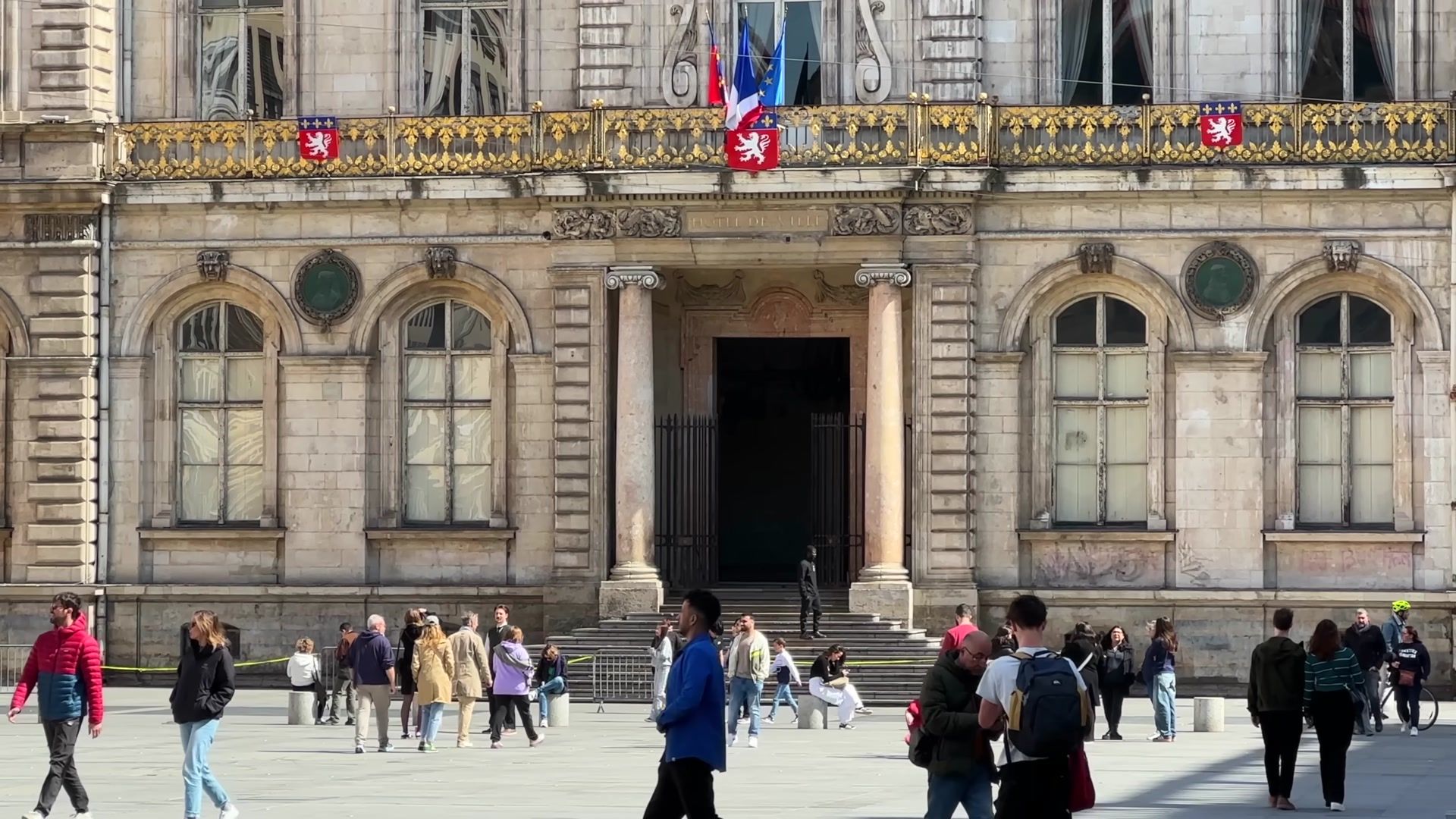
Daily life in Lyon is shaped by three things: the rivers, the hills, and the food.
The Rhône and Saône cut the city into clear pieces — the Presqu'île peninsula in the middle, Vieux Lyon and Fourvière to the west, the modern city to the east. You cross water multiple times a day. Walking along the Berges du Rhône (the riverside promenades) replaces gym time for a lot of locals. The Confluence area, where the two rivers meet, is one of the most-redeveloped neighborhoods in any French city.
The hills shape your routine. Croix-Rousse sits on a slope above the Presqu'île and is reached by funicular, metro, or a real climb. Fourvière is reached by funicular. From an American point of view, the city's relationship to elevation is closer to San Francisco than to Paris — you don't think about it until your legs do.
Food culture isn't a tourist line in Lyon; it's the structural element of daily life. Bouchons (the traditional Lyonnais bistros) are real working restaurants, not theme parks. The Halles de Lyon Paul Bocuse is a serious indoor market, not a curated experience. Saturday markets along Quai Saint-Antoine, in Croix-Rousse, and elsewhere are how locals actually shop. Two of France's most important wine regions — Beaujolais to the north and the Côtes du Rhône to the south — are at your doorstep.
Public transport carries the rest. The TCL network covers the city with four metro lines, seven tram lines, around 150 bus routes, two funiculars, and a river shuttle, totaling roughly 3,000 stops. A monthly pass for under €70 (verify current pricing) gives you the entire system. If you're coming from a car-dependent U.S. city, this is one of the most freeing aspects of Lyon life.
The rhythm is calmer than Paris. Lunch lands around 12:30 to 2 p.m. (the famous French lunch break is more strictly observed in Lyon than in Paris). Dinner from 7:30 to 8:30 p.m. is standard — earlier than Spain, more relaxed than Paris's bistro intensity. People walk dogs along the Rhône. Cafés have time. Service is more formal than in the U.S. but warmer than in Paris, in my experience.
The frustrations are concentrated in the same places they are anywhere in France. Bureaucracy. Stores closed Sundays in many areas. Some restaurants closing for two-hour lunch breaks at 2 p.m. when you finally got hungry. Heating in older apartments that doesn't quite reach the corners. Real but manageable.
Cost of Living in Lyon for Americans
Lyon is meaningfully cheaper than Paris and roughly comparable to a mid-tier U.S. city in many categories. It's not "cheap France" — it's France's third-largest city, and rents have risen — but the cost-to-quality ratio is genuinely strong. Treat the ranges below as approximate; verify against current listings.
Solo American remote worker budget
A solo American renting a small one-bedroom in a central or near-central neighborhood, eating well a few times a week, using a TCL pass, and going out socially typically lands in the €1,800–€2,800 per month range. Croix-Rousse, parts of the 7th arrondissement (Guillotière), and Villeurbanne sit at the lower end. Brotteaux (6th), prime Presqu'île, and central Vieux Lyon push higher.
Couple budget
Couples in a one-bedroom or small two-bedroom usually run €2,500–€3,800 per month comfortably. Splitting fixed costs improves the math, and Lyon's market rewards that more than Paris's does.
Family budget
A family with one or two kids needing a real two- or three-bedroom apartment, with private complementary insurance ("mutuelle"), occasional eating out, and modest travel, generally lands in the €3,500–€6,000+ per month range. The 6th (Brotteaux) and parts of Croix-Rousse-Caluire push the upper end. International schools (Cité Scolaire Internationale, EIB Lyon, etc.) can add a substantial separate line item.
What usually costs more than Americans expect
Furnished rentals rent at a real premium over unfurnished.
Air conditioning retrofits: many older Lyonnais apartments lack AC, and summer heat waves are increasingly common.
Restaurant tasting menus at top bouchons and Michelin tables: high-quality but not budget.
Bureaucratic friction costs: certified translations, apostilles, sometimes a notaire.
U.S.-imported groceries: peanut butter, ranch, certain cereals, decent maple syrup.
Coworking memberships: typically €150–€350/month for serious spaces.
Where Americans may save money compared with Paris or major U.S. cities
Rent: dramatically cheaper than Paris for comparable square meters; comparable to or below mid-tier U.S. cities.
Eating out: a "formule" bouchon lunch can run €18–€25 for multiple courses.
Wine and produce at markets: high quality at fair prices.
Public transport: a TCL monthly pass is dramatically cheaper than U.S. car ownership.
Healthcare: private insurance for healthy adults is a fraction of U.S. premiums.
Travel: the TGV network, plus EasyJet and similar from Lyon Saint-Exupéry, makes weekends across France and Europe genuinely affordable.
Phone and internet: gigabit fiber + mobile bundles often land in the €30–€50 per month range.
Best Neighborhoods in Lyon for Americans and Expats
Croix-Rousse (1st / 4th arrondissement)
Vibe: Hilltop, village-like, creative, historically the silk workers' (canuts) neighborhood. Independent shops, plazas, weekly markets, panoramic views over the city. Cost: Mid; rising as it's gained popularity. Who it suits: Americans who want neighborhood identity, character, and a strong local feel — particularly creatives, freelancers, and remote workers. Tradeoff: The hill is real; older buildings often have small or no elevators.
Presqu'île (1st / 2nd arrondissement)
Vibe: Central, walkable, the city's main commercial and dining peninsula. UNESCO-listed in large parts. Place Bellecour, Place des Terreaux, Rue de la République. Cost: Mid-to-high. Who it suits: First-time American arrivals who want maximum convenience and walkability without a learning curve about which neighborhood is which. Tradeoff: Some sub-areas are more touristed; weekend foot traffic is heavy near the main shopping streets.
Vieux Lyon (5th arrondissement)
Vibe: The Renaissance old town — narrow streets, traboules (covered passageways), iconic atmosphere. UNESCO-listed. Cost: Mid-to-high. Who it suits: Americans who want the most atmospheric possible Lyon address. Tradeoff: The most touristed part of the city. Apartments tend to be old, sometimes small, sometimes lacking modern amenities. Walk it at peak hours before signing.
Part-Dieu (3rd arrondissement)
Vibe: The business and transport center. High-rises, the main TGV station, shopping mall, corporate offices. Practical rather than romantic. Cost: Mid; varies sharply by sub-area. Who it suits: Americans on corporate assignment, frequent train travelers, professionals who prioritize transport access over neighborhood charm. Tradeoff: Less of the "old Lyon" feel; some streets feel more functional than evocative.
Confluence (2nd arrondissement)
Vibe: The newest neighborhood — modern architecture, redeveloped industrial waterfront, design-forward shopping mall, museums (Musée des Confluences). Cost: Mid-to-high; newer buildings command premiums. Who it suits: Americans who prefer modern apartments over old-Lyon character — young professionals, tech workers, families wanting newer infrastructure. Tradeoff: Less historical density; some still consider it under construction; can feel quiet at night.
Brotteaux / 6th arrondissement
Vibe: Polished, residential, leafy. Anchored by Parc de la Tête d'Or — one of Europe's largest urban parks. Strong dining scene, calmer than Presqu'île. Cost: High overall; among the most expensive in Lyon. Who it suits: Families, higher-earning Americans, professionals who want quiet residential life with full city access. Tradeoff: Less spontaneous social life than Croix-Rousse or Presqu'île; you trade energy for calm and quality.
Guillotière (3rd / 7th arrondissement)
Vibe: Multicultural, central, energetic, more mixed in character. Reputation has shifted over the years and varies by sub-area. Cost: Mid; lower than Croix-Rousse or Brotteaux. Who it suits: Americans on a tighter budget who want central access and diverse food, and don't need a polished aesthetic. Tradeoff: Some streets feel more worn than others; preferences vary block by block. Visit before committing.
Villeurbanne
Vibe: A separate municipality directly adjacent to Lyon, well-served by metro, often considered Lyon's "cooler younger sibling." Mix of student energy and family residential. Includes the Tonkin and Gratte-Ciel areas. Cost: Often lower than equivalent space in Lyon proper. Who it suits: Americans who want more apartment for less rent, students, families on a budget, and people who don't mind a Lyon-adjacent address. Tradeoff: Less of the "lived in Lyon" identity; depends on whether that matters to you.
For most first-time American arrivals, the practical defaults are Croix-Rousse, Presqu'île, or Brotteaux, depending on whether your priority is character, convenience, or family calm.
Housing Reality in Lyon
Housing in Lyon is meaningfully easier than Paris — but it's still French, which means paperwork. Many of the same dynamics apply: dossiers matter, listings move fast in popular neighborhoods, and the rental process feels foreign to Americans used to U.S. brokerage norms.
Apartments are generally larger than in Paris. A "comfortable" central one-bedroom is often 40–60 m² (about 430–650 sq ft) — still smaller than U.S. suburban norms, but a real upgrade from Parisian studios. Two-bedrooms in family neighborhoods can be genuinely livable for a family of four.
Furnished (meublé) vs unfurnished (vide) is the same call as Paris. Furnished is faster and easier for newcomers but rents at a premium; leases are often shorter (1-year standard, plus shorter "mobility leases" for specific cases). Unfurnished is cheaper and more flexible but expects you to furnish entirely (sometimes including light fixtures), comes with longer leases (typically 3 years), and demands stronger paperwork.
The dossier requirements are very French:
Proof of stable income, often three to four times monthly rent
A French guarantor, or a paid guarantor service (Garantme is common; Visale works for certain visa-holders)
Recent French pay slips or proof of income (a problem for new arrivals earning in dollars)
Two to three months of rent up front
A complete French-language dossier, often submitted within hours of viewing
Americans coming directly from the U.S. without a French income history are at the same structural disadvantage they'd face in Paris, just at lower price points. Many newcomers start with furnished rentals or use relocation services for the first move and switch to unfurnished after 12–18 months.
A common American mistake: assuming Lyon's rental market is loose because the city is smaller. Popular neighborhoods (Croix-Rousse, Brotteaux, the better parts of the Presqu'île) have real competition, especially in late summer when students and academics arrive.
Remote Work, Internet, and Everyday Convenience
For American freelancers, consultants, and remote workers, Lyon can absolutely work — but the visa landscape is the first thing to understand, and it's the same as Paris.
Lyon is not a frictionless digital nomad city, because France itself isn't. France has no simple, dedicated digital nomad visa equivalent to Spain's Telework Visa or Portugal's D8. The French government has been explicit that working remotely from France on a tourist or visitor visa is not a legal pathway, regardless of where your clients are. Americans who want to live in Lyon and work remotely need a real long-stay visa — typically the profession libérale (self-employed) route, the Talent Residence Permit (for qualified employees, founders, or specific high-skill profiles), or the entrepreneur pathway. More on visas below.
If you have the right legal status, the day-to-day mechanics of remote work are excellent. Fiber internet is widespread, fast, and cheap — gigabit plans bundled with mobile typically land in the €30–€50 per month range. Cell coverage is strong. Coworking is mature for a city this size: La Cordée (Lyon-founded, now expanded), Now Coworking, WeWork, Spaces, and a long list of independents cluster around the Presqu'île, Confluence, Part-Dieu, and the 6th. Day passes generally run €15–€25; serious monthly memberships €150–€350.
The biggest practical tradeoff is the time zone. Lyon is 6 hours ahead of New York and 9 ahead of San Francisco — same as Paris. East Coast clients map onto Lyon afternoons; West Coast clients mean late evenings. The long quiet morning before U.S. clients are awake is a productivity feature for many Americans.
Cafés are generally less laptop-friendly than U.S. coffee shops, especially at meal hours. Some Croix-Rousse and Presqu'île spots tolerate work; bouchons and traditional bistros do not. Read the room.
Healthcare and Everyday Services
France's healthcare system consistently ranks among the world's best, and Lyon — home to major teaching hospitals (Hospices Civils de Lyon are the second-largest CHU group in France), the International Agency for Research on Cancer, and Inserm research labs — has unusually strong medical infrastructure for a city its size.
Public health coverage in France (Assurance Maladie / PUMA) is generally tied to legal residence and stable presence. New arrivals on long-stay visas typically go through a registration process to be assigned a Social Security number; this can take months. Many Americans entering France are required to maintain comprehensive private health insurance for the initial period, especially as part of long-stay visa requirements. Once enrolled in the French system, residents typically also carry a "mutuelle" (complementary private insurance) covering the portion the public system doesn't reimburse — a normal and inexpensive feature of French life, not a U.S.-style premium.
Practically, Americans in Lyon can find English-speaking doctors and specialists, particularly through international clinics and at major hospitals. Pharmacies are everywhere, well-stocked, and pharmacists are trained to handle minor issues directly.
