Living in London as an American: Cost, Neighborhoods, Pros and Cons

My First Honest Impression of London
What surprised me about London is how legible it feels to an American on day one. The street signs are in English. The Tube map makes immediate sense. People queue, they tap in and tap out, they say "sorry" reflexively. Coffee shops work. Banking apps work. Amazon works. The barriers that take Americans six months to clear in Paris or Madrid — language, daily logistics, basic transactions — are mostly absent here. From an American point of view, London is the European capital that feels closest to a U.S. city while still being unmistakably foreign.
But London also feels expensive immediately. The mid-2023 population was around 8.945 million per ONS estimates, making it one of the largest urban areas in Europe and one of the most internationally diverse cities in the world — over 4 in 10 London residents in the 2021 Census were non-UK-born, and more than 1 in 5 held a non-UK passport. That global density translates into demand. Rents are at New York or San Francisco levels. ONS data put London's average private rent at around £2,273/month in February 2026 — the highest of any English region — and Kensington and Chelsea sat at roughly £3,628/month, the kind of number that gets Americans' attention quickly.
The other early reality check is the visa landscape. Since 25 February 2026, U.S. citizens traveling to the UK for tourism, family visits, business meetings, conferences, or short-term study of six months or less must have an Electronic Travel Authorisation (ETA) before traveling. That covers visiting. It is not a path to living and working in London. To actually move here, Americans need a real visa — typically a Skilled Worker visa sponsored by an approved UK employer, the Global Talent visa, the High Potential Individual visa for graduates of qualifying universities, a family or partner visa, or a student visa. The UK does not have a simple dedicated digital nomad visa.
The honest first impression: London delivers on what it promises — a global, English-speaking, culturally dense capital with career gravity and world-class infrastructure. It also charges what it costs. The right Americans love it. The wrong Americans burn cash for two years and move to Lisbon.
What Daily Life in London Actually Feels Like
Daily life in London is built around three things: your Tube line, your neighborhood, and your work. Each of those defines the others.
Public transport is the dominant fact of daily life. Most Londoners — and most Americans living here — go fully car-free. The Underground (Tube), buses, Elizabeth line, Overground, DLR, trams, and river services all run under Transport for London (TfL), with a single tap-in tap-out fare structure using contactless cards or phones. Daily and weekly fare caps mean you don't pay endlessly for individual journeys. From an American point of view, this alone changes the calculation of what a city can feel like.
Neighborhood-based living is the second structural fact. London is too big to live in as a single city — most people experience a few neighborhoods deeply and the rest as a Tube ride away. Where you live shapes your social life, your commute, your cost of living, your weekend routine. An Islington life is genuinely different from a Clapham life, which is different from a Hackney life, which is different from a Canary Wharf life. Picking your neighborhood is half the move.
Cultural density is the third. London has more theatres than New York. Museums (most major ones free). World-class concerts, opera, ballet, festivals, sport. Pubs as the structural unit of social life — not a tourist activity but the actual default for after-work drinks, weekend afternoons, and Sunday roasts. Markets like Borough, Maltby Street, Broadway Market, and Columbia Road Flower Market are real working markets, not curated tourist experiences. From an American point of view, the cultural bandwidth here is unusual: you can have a NYC-density entertainment week for the cost of a Tube pass plus a few pints.
Work culture is closer to the U.S. than most of Europe but still distinctly British. Hours are long but generally less brutal than New York or San Francisco's worst. Holiday allowances are better — typically 25+ paid days plus bank holidays — though still less than European norms. The pub at 5:30 p.m. on a Friday is a real institution.
The frustrations stack up over time. Rent eats most American income optimistically. Commutes can be punishing — the Tube at peak hours is genuinely uncomfortable. Strikes and signal failures disrupt service more often than newcomers expect. Gray weather affects mood more than the temperatures suggest; sunset around 4 p.m. in December is a real adjustment, especially for Americans coming from sunnier U.S. cities. Smaller flats than U.S. norms are universal. None of this is a dealbreaker. All of it adds up.
Cost of Living in London for Americans
London is expensive. Let's not pretend otherwise. ONS reported the average London private rent at around £2,273/month in February 2026, the highest of any English region, with Kensington and Chelsea reaching about £3,628/month. Treat the ranges below as approximate and verify against current listings.
Solo American professional budget
A solo American renting a one-bedroom or studio in a livable central or inner-zone neighborhood typically lands in the £3,000–£4,500 per month total range, with rent doing most of the damage. Sharing a flat (a "house share" or "flat share") is genuinely common among single professionals well into their 30s here — even on six-figure salaries — because it cuts the rent in half.
Couple budget
Couples in a one-bedroom or small two-bedroom in a livable inner-zone neighborhood usually run £4,000–£6,000+ per month. Splitting fixed costs improves the math, but London doesn't reward you the way Madrid or Lisbon does.
Family budget
A family with one or two children needing a real two- or three-bedroom flat or small house, with private health coverage, occasional eating out, modest travel, and (often) school costs, generally lands in the £6,000–£12,000+ per month range. The wide range reflects neighborhood (Richmond, Wimbledon, Greenwich, Dulwich, Notting Hill all push the upper end), commute, and school choice. International schools can be a substantial separate line item; UK state schools are excellent in many areas but tied to catchment, which means location and admission timing matter.
What usually costs more than Americans expect
Rent, full stop. The headline number is rarely the full number.
Council tax: a separate monthly tax on most properties, billed by the borough, varying by property band. Plan for it; it's not optional.
Utilities and heating: gas and electric bills run higher than U.S. equivalents in older buildings, especially in winter.
Eating out: restaurants and bars are often comparable to NYC pricing.
Coworking memberships: typically £250–£500/month for serious central spaces.
Immigration Health Surcharge (IHS): required upfront for many visa applicants — currently around £1,035/year per adult applicant, charged for the duration of the visa. A meaningful upfront cost for a multi-year visa.
Childcare: among the most expensive in Europe.
Visa fees: real, multi-thousand-pound costs at application.
Where Americans may save money compared with U.S. cities
Healthcare: NHS access (once eligible and IHS paid) is free at point of use for most services. Many Americans add private cover, but the overall healthcare cost is still dramatically lower than U.S. equivalents.
Public transport: a monthly Tube/bus pass is far cheaper than U.S. car ownership.
Museums and cultural institutions: most major museums are free.
Travel within Europe: weekends in Paris (~2.5 hours by Eurostar), Amsterdam, Berlin, Madrid, Barcelona, Lisbon, Rome at budget-airline or Eurostar prices.
Phone and internet: gigabit fiber + mobile bundles often £30–£50 per month combined.
Why salary and neighborhood choice matter more than averages
London salaries are lower than NYC or SF for equivalent roles in most industries — sometimes meaningfully so. The math only works when one of the following is true: (a) you're earning a senior salary at a major global firm, (b) you're earning in U.S. dollars on a remote contract (which requires the right visa), (c) you're optimizing total quality of life rather than savings, or (d) you have a clear professional reason to be specifically in London. If you're moving abroad mainly to save money, London is the wrong city.
Best Neighborhoods in London for Americans and Expats
Islington
Vibe: Polished but lively, mix of period housing and modern flats, strong restaurant and bar scene around Upper Street, parks, good schools. Cost: High. Who it suits: American professionals and couples who want an everyday-livable area with real character and excellent transport (Northern, Victoria, Overground). Tradeoff: Expensive, smaller flats, popular and competitive.
Shoreditch / Hoxton
Vibe: Creative, tech-and-startup, dense with bars, restaurants, art, music venues. East London cool, with all the gentrification politics that come with it. Cost: High and rising. Who it suits: American tech, design, marketing, and startup workers who want to be at the center of London's creative economy. Tradeoff: Loud on weekends, smaller flats, can feel intense.
South Kensington

Vibe: International, polished, elegant, museum-rich (V&A, Natural History Museum, Science Museum), dense with embassies and international schools. Cost: Very high. Who it suits: American families, especially those on corporate transfer or with kids in international schools; Americans who want classic London prestige. Tradeoff: Among the most expensive areas in London; some Americans find it feels less like "real London."
Notting Hill
Vibe: Pastel houses, weekend markets (Portobello), village-like in pockets, beautiful and tourist-visible. Cost: Very high. Who it suits: Americans who want the iconic London setting and have the budget; couples and families. Tradeoff: Tourist density on weekends, expensive, more residential than nightlife-driven.
Canary Wharf

Vibe: Modern, polished, finance-and-tech corporate, riverside skyscrapers, clean and efficient. Cost: High; varies by tower and view. Who it suits: American finance, tech, and consulting professionals working on the Canary Wharf campus, families wanting newer buildings and good amenities. Tradeoff: Can feel less like traditional London — more like a high-end U.S. corporate district. Some find it sterile.
Clapham

Vibe: Popular with younger professionals, big commons, lively bars and restaurants, south London energy. Cost: Mid-to-high (cheaper than Islington or Shoreditch in many cases). Who it suits: American professionals in their late 20s and 30s wanting social life and parks; common landing zone. Tradeoff: South London commute can be longer to certain job hubs; certain streets are quite party-driven.
Hackney

Vibe: Creative, diverse, independent, energetic, with strong food and cultural scenes (Hackney Wick, Broadway Market, Dalston). Cost: Mid; varies sharply by sub-area. Who it suits: Americans wanting creative, less corporate London; designers, writers, founders. Tradeoff: Can feel uneven micro-area to micro-area; transport varies (Overground access strong, Tube access weaker in some parts).
Greenwich

Vibe: Historic, riverside, calmer, beautiful Royal Park, market on weekends. Cost: Mid. Who it suits: Americans who want quieter residential life with historic character; families. Tradeoff: Farther from many central job hubs; commute matters more here.
Richmond

Vibe: Green, affluent, family-oriented, riverside, near the famous Richmond Park. Cost: High. Who it suits: American families wanting space, parks, and quality state schools; people who don't need a central commute every day. Tradeoff: Far from central London; works best with hybrid work or local employer.
Battersea
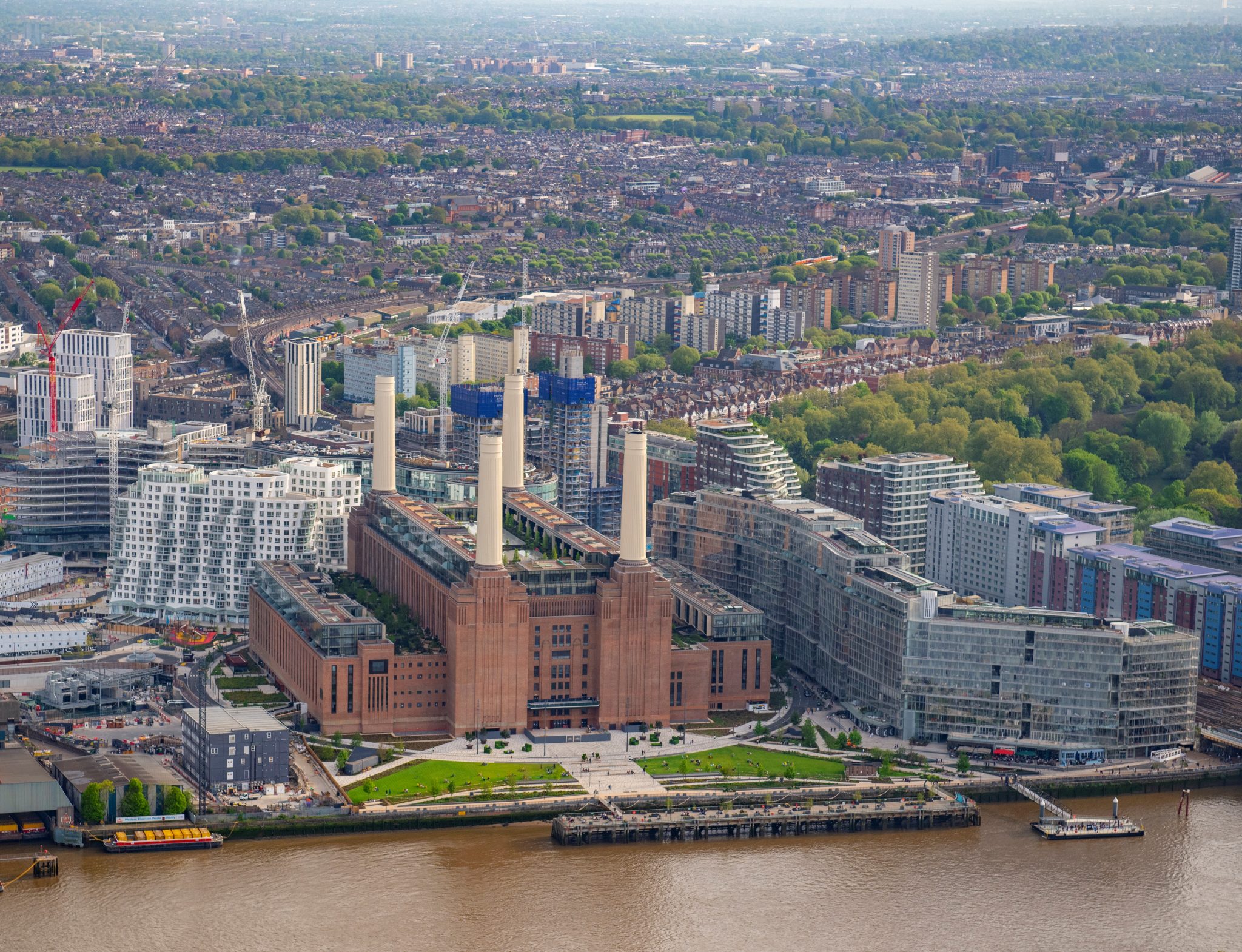
Vibe: Riverside, rapidly redeveloped (especially around Battersea Power Station and the new Northern line extension), parks, mix of newer and older buildings. Cost: High. Who it suits: American professionals and couples wanting modern flats and central access; families wanting the park. Tradeoff: Newer developments can feel less rooted in neighborhood character.
Camden
Vibe: Music, markets, energy, student and creative feel, gritty in a specific way. Cost: Mid-to-high. Who it suits: Americans drawn to music and alternative culture; younger professionals. Tradeoff: Crowded, especially weekends; not for people wanting polished quiet.
Brixton

Vibe: Diverse, food-driven, lively, strong nightlife, deep community character. Cost: Mid. Who it suits: Americans wanting energy, food culture, and genuine diversity, who don't want polished living. Tradeoff: Some streets feel more worn than others; varies block by block.
For most first-time American arrivals, the practical defaults are Islington, Clapham, Shoreditch, or Battersea/Canary Wharf for professionals, and South Kensington, Richmond, or Greenwich for families with budget.
Housing Reality in London
Housing is the single hardest part of moving to London. Not the visa, not the bureaucracy, not the language — the rent.
The basic facts that surprise Americans first: London flats are generally smaller than U.S. norms (a "two-bedroom" in London is often what would be marketed as a one-bedroom in the U.S.), buildings are old, kitchens are often compact, washing machines live in kitchens, dryers are uncommon (heated drying racks are normal), and central heating runs on demand rather than continuously.
Furnished vs unfurnished: London leases are commonly furnished or part-furnished, especially in central neighborhoods, which is convenient for newcomers but rents at a premium. Long-term unfurnished rentals exist but are more common in family-oriented outer areas.
Rental competition is real. Good flats in popular neighborhoods move within a day or two of listing. You'll typically need:
Several weeks of rent up front (deposit plus first month's rent; deposits are protected under government-backed schemes)
Reference checks from previous landlords and employers
Proof of income (often UK pay slips or a UK contract — a problem for new arrivals earning in dollars)
A UK guarantor in some cases, or several months of rent paid up front instead
House shares and flat shares are completely normal even for established professionals. SpareRoom is the standard platform. From an American point of view, the equivalent would be a 32-year-old senior consultant in San Francisco living with two roommates by choice, not necessity — that's the London standard.
Council tax is the surprise expense most Americans miss. Each property has a council tax band, billed monthly (often £100–£300+/month depending on band and borough). Plan for it.
Zone-based decisions matter. London is divided into transport zones radiating out from Zone 1 (central). The closer to Zone 1, the higher the rent and the shorter the commute. Many Americans land in Zone 2 (areas like Islington, Hackney, Clapham, Battersea) as the practical sweet spot.
Remote Work, Offices, Internet, and Everyday Convenience
For American professionals, London is one of the strongest cities in the world to live and work in — provided you have the right visa. That's the gating factor.
Visa-wise, the UK does not have a simple dedicated digital nomad visa. Americans living in London long-term typically arrive on a Skilled Worker visa (sponsored by an approved UK employer), a Global Talent visa (for proven leaders in academia, digital tech, arts, etc.), a High Potential Individual visa (for recent graduates of qualifying universities), a family/partner visa, a student visa, or an intra-company transfer. The ETA permits short visitor stays only — not work, not living.
If you have the right legal status, the day-to-day mechanics are excellent. Fiber internet is widespread, fast, and cheap. Cell coverage is strong. Coworking is mature — WeWork (heavy presence), Soho House Works, The Ministry, Second Home, Huckletree, FORA, and many independents cluster in the City, Shoreditch, Soho, Fitzrovia, and around Kings Cross. Day passes typically run £25–£50; serious monthly memberships £300–£600.
UK work culture sits between U.S. and continental European norms. Hours are generally long but less brutal than NYC's worst sectors. Holiday allowances (typically 25 paid days plus 8 bank holidays) are better than U.S. norms but less than France, Germany, or Spain. Email after 7 p.m. is less expected than in the U.S. The pub at 5:30 p.m. on a Friday is a real institution that Americans should not skip.
Time zone tradeoffs: London is 5 hours ahead of New York and 8 ahead of San Francisco. East Coast clients map onto your afternoon cleanly. West Coast clients mean evening calls. For many Americans, the long quiet morning is a productivity feature.
Cafés are not laptop battlegrounds to the same extent as New York or Berlin. Some are genuinely laptop-friendly (chains like Pret, certain independents in Shoreditch and Hackney). Many are not, especially during meal hours. Read the room.
Healthcare and Everyday Services
The NHS (National Health Service) is the structural fact about UK healthcare, and Americans need to understand it before assuming access.
For most Americans on long-stay visas, GOV.UK indicates that you may need to pay the Immigration Health Surcharge (IHS) as part of the visa application, currently around £1,035 per year per adult applicant (verify the current amount; it has changed). Once your visa starts and the IHS has been paid where required, you can start using the NHS from the date the visa starts. Some services — prescriptions, dental treatment, eye tests — may still require payment.
Practically, this means a typical American professional on a Skilled Worker visa pays the IHS upfront for the full visa duration (often 5 years × £1,035 = around £5,175 per adult, plus dependents), and then has access to NHS GP visits, specialist referrals, and hospital care without further per-visit charges for most services.
GP registration is the practical first step. You register with a GP local to your address. GP availability and wait times vary by area and have been a real point of pressure in recent years. Many Americans add private health insurance (Bupa, AXA, Vitality, others) on top of NHS access — typically £50–£150+/month for a healthy adult — for faster specialist access, private hospitals, and convenience. This is increasingly common among American professionals.
Pharmacies (Boots, Superdrug, independents) are everywhere and pharmacists are trained to advise on minor issues. Prescription costs in England are generally a flat per-item charge, dramatically less than U.S. equivalents.
This is general information only, not legal or medical advice. Verify your specific situation with an immigration professional, a licensed insurance broker, or official GOV.UK and NHS sources.
Getting Around London Without a Car
For Americans coming from car-dependent U.S. cities, this is one of the largest quality-of-life upgrades you can experience.