Living in Hanoi as an American: Cost, Neighborhoods, Pros and Cons

My First Honest Impression of Hanoi
What surprised me about Hanoi is how layered it feels. From an American point of view, Hanoi is older, slower, and denser than most U.S. cities prepare you for. Vietnam Tourism describes it as a capital with more than 1,000 years of history and Old Quarter streets dating back to the 14th century, and you feel that immediately — temples next to motorbike repair shops, French colonial villas next to Soviet-era apartment blocks, lakeside coffee shops next to government ministries. Lakes anchor the city: Hoan Kiem in the historic center, West Lake (Tay Ho) to the north, Truc Bach just off it. People walk around them, drink coffee facing them, exercise around them at dawn. It's a city that gives you texture daily, not as a tourist experience but as background to ordinary life.
But Hanoi is also not a frictionless place to live. The city of approximately 8.5 million people runs on motorbikes — local estimates cite around 8 million motorbikes and 1.5 million cars in active use. The streets are dense, sidewalks are often occupied by parked motorbikes or food vendors, and crossing the road takes a kind of patient confidence that takes Americans weeks to acquire. The winter is gray, damp, and cold in ways that surprise people who think "Vietnam" means tropical. The summer is genuinely hot and humid. And the air quality — the part of Hanoi that doesn't show up in travel essays — is one of the most serious environmental factors of any major Asian capital. Hanoi ranks repeatedly in the world's top-10 most polluted major cities during winter PM2.5 episodes, and the 2024 annual PM2.5 average was around 45 µg/m³, roughly nine times the WHO annual guideline.
The adjustment many Americans will feel first is that Hanoi rewards patience and curiosity, not optimization. The city does not run on Western efficiency or on Southeast-Asian capital intensity like Bangkok. It runs on its own rhythm — slower, more communal, more local. From an American point of view, this is either deeply attractive or deeply frustrating, sometimes both in the same week. The other early realization is that Hanoi is fundamentally different from Ho Chi Minh City. The two cities are often grouped as "Vietnam," but they feel like different countries — Hanoi is the political and cultural capital, more atmospheric and more reserved; HCMC is the business and commercial capital, faster and more international.
The honest first impression: Hanoi is one of the most culturally rewarding Asian capitals for an American who can manage the air quality, the language barrier, and the visa or work permit complexity. It's a serious move, not a soft landing. For the right person — culture-driven, willing to invest in apartment quality and air purifiers, comfortable with slower administrative processes — Hanoi delivers something genuinely uncommon.
What Daily Life in Hanoi Actually Feels Like
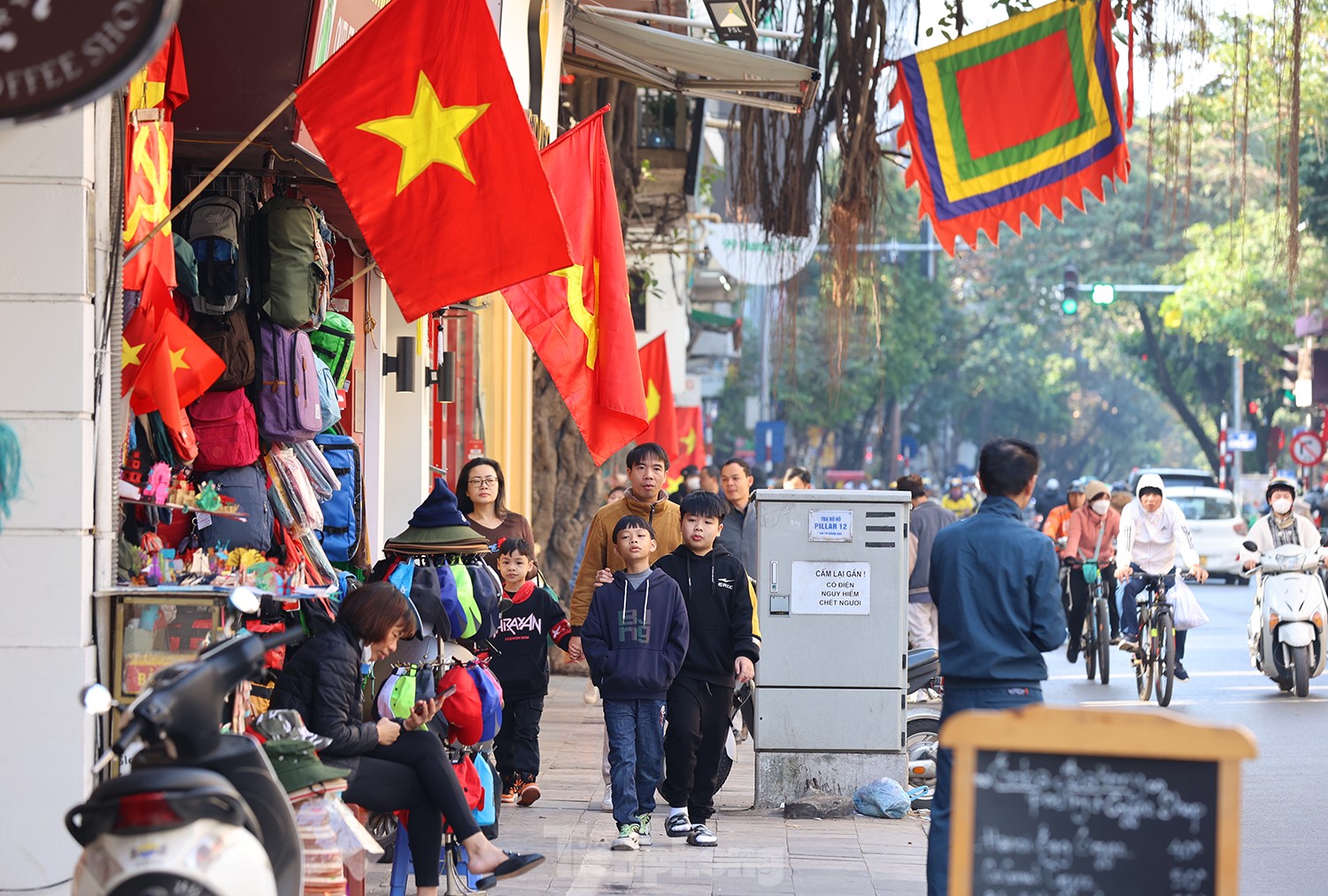
Daily life in Hanoi is built around three things: your neighborhood (which is more decisive here than visitors realize), your mode of mobility, and your air quality awareness.
Lake-based routines are real. West Lake (Ho Tay) anchors the international resident experience — cafés along Quang Khanh and Tu Hoa, restaurants facing the water, the long walking path around the lake at dawn or sunset. Hoan Kiem Lake anchors the historic center, with its weekend pedestrian zone closing the surrounding streets to traffic on Friday evening through Sunday. Truc Bach, smaller and quieter, has its own identity. From an American point of view, these aren't tourist destinations — they're daily-life infrastructure.
Café culture is one of Hanoi's strongest assets. Vietnamese coffee tradition is its own thing — drip-filtered ca phe sua da, egg coffee (a Hanoi invention), salt coffee, coconut coffee — and the café density across the city is unmatched in most of Asia. Americans coming from U.S. cities will probably notice that cafés function as social hubs, work spaces, and casual meeting spots far more than restaurants or bars do. Many remote workers spend genuine workdays rotating through three or four favorite cafés.
Street food is everywhere and structural to daily life. Pho (the morning version is often beef, the lunch version sometimes chicken), bun cha (Obama's famous Hanoi meal), bun bo nam bo, banh mi, bun rieu, bun thang — these are not tourist experiences. They're how you eat lunch for 40,000–80,000 VND ($1.50–$3.50). The sidewalk plastic-stool culture is real, and once you stop seeing it as informal and start seeing it as the most efficient food infrastructure in the world, your monthly food spending drops significantly.
Motorbike-heavy streets define Hanoi's daily texture. The 8 million motorbikes are not metaphor — they're how the city moves. Crossing the street works by maintaining steady predictable pace so riders can flow around you. Driving a car in central Hanoi is genuinely difficult; many residents use Grab car for longer trips and Grab motorbike for shorter ones. Some Americans rent or buy motorbikes and learn to ride; many never do.
Slower rhythm than Ho Chi Minh City is real and palpable. Restaurants close earlier. Business meetings are less aggressive. Conversations take longer to get to the transaction. The pace of decision-making in offices is slower. Some Americans find this freeing; some find it frustrating. Both reactions are normal.
The cultural and political capital feeling shows up in how Hanoi treats its history and its institutions. Government buildings, ministries, embassies, museums, the Ho Chi Minh mausoleum, universities — Hanoi is the seat of Vietnamese political and cultural life in a way HCMC isn't, and you feel it.
Noise, sidewalks, and density are constant. Motorbike horns, construction, café music, neighborhood karaoke (a Vietnamese cultural feature that surprises many newcomers), and street vendors create a constant audio texture. Sidewalks are often occupied by parked bikes, food stalls, and shop overflow, which means most of your walking actually happens on the edge of the street. This is normal here; it just takes adjustment.
Air quality as a daily-life factor cannot be overstated. During winter (typically October through February), temperature inversions and stagnant weather combine with traffic emissions, construction dust, regional coal plants, and agricultural burning to produce sustained PM2.5 episodes. In December 2025, PM2.5 concentrations in Hanoi nearly reached 197 µg/m³ — about 13 times the WHO's recommended 24-hour limit — and IQAir ranked Hanoi the most polluted city in the world for a moment that night. Apartments need air purifiers. Apps like IQAir or AirVisual become daily-life tools. Outdoor exercise gets relocated indoors during the worst weeks. Masks are normal.
The frustrations stack up over time. Air quality during winter. Damp cold winters that make older apartments uncomfortable. Sidewalks that aren't really walkable. Traffic that makes "10 minutes on the map" actually 25 minutes. Visa and work permit compliance that requires ongoing attention. The language barrier in deeper contexts. The administrative slowness that turns simple tasks into multi-visit processes. None of this is unusual for a major Asian capital. All of it is normal Hanoi.
Cost of Living in Hanoi for Americans
Hanoi can be dramatically cheaper than most U.S. cities — meaningfully cheaper than even Bangkok in some categories. The cost-of-living math is among the strongest in Asia. Treat the ranges below as approximate; verify against current listings before you commit.
Solo American remote worker budget
A solo American on a moderate lifestyle — modern serviced apartment or condo in a livable neighborhood, mix of street food and Western restaurants, gym, occasional Grab, café work — typically lands in the $1,000–$2,500 per month range. Below $900/month is possible with strict lifestyle discipline in less expat-heavy neighborhoods. Above $3,000/month is easy in Tây Hồ premium apartments with frequent international dining.
Couple budget
Couples sharing a one-bedroom or small two-bedroom typically run $1,500–$3,500 per month. Splitting fixed costs makes the per-person math meaningfully better.
Family budget
A family with one or two children needing a real two- or three-bedroom apartment or small villa, private health insurance, occasional eating out, and (the key variable) international school tuition typically lands in the $3,500–$10,000+ per month range. International school tuition alone — at major options like UNIS Hanoi, BIS Hanoi, Concordia International School Hanoi, Hanoi International School, ISHCMC affiliated schools — can run $20,000–$40,000+/year per child, comparable to U.S. private schools. Without international schools, family budgets compress substantially.
Teacher / NGO worker budget considerations
Many Americans in Hanoi are teachers (at international schools or English language centers) or NGO/international-organization workers. Salaries for international school teachers in Hanoi often include housing allowance, health insurance, and education benefits, making the package math significantly different from base-salary comparisons. English teaching salaries vary widely — major language centers (Apollo, ILA, VUS, Wall Street English) pay roughly $1,500–$2,500/month for qualified teachers, often without housing. NGO and embassy-adjacent positions vary too widely to generalize.
What usually costs more than Americans expect
Tây Hồ premium apartments: rents in the most expat-focused buildings rival mid-tier U.S. cities, particularly serviced apartments aimed at corporate transferees.
International school tuition: comparable to U.S. private schools.
Imported Western groceries: at Annam Gourmet, K-Mart, or Western-aligned grocers, prices are 2–4x local equivalents.
Western restaurants and cocktail bars: especially in Tây Hồ — meals can cost 5–8x equivalent street food.
Private health insurance for older Americans: rises sharply with age.
Air purifiers (and replacement filters): $200–$800 upfront per unit; many apartments need multiple.
Reliable Grab during rush hour or rain: prices surge meaningfully.
Visa and work permit costs: agency fees, document handling, possible visa runs.
Where Americans may save money compared with U.S. cities
Street food: structurally cheap and exceptionally good. $1.50–$3.50 for a complete meal.
Local apartment rentals: serviced one-bedrooms in good neighborhoods at $500–$900.
Coffee: $1–$2 at most cafés, including specialty places.
Grab and motorbike taxis: dramatically cheaper than U.S. ride-sharing.
Domestic help: housekeeping, laundry, cooking at fractions of U.S. cost.
Healthcare at private hospitals: substantial discounts to U.S. pricing for paying patients.
Phone and internet: fiber + 5G mobile from $15–$30/month combined.
Massage, gym, wellness: massages from $10–$25/hour; gyms $30–$100/month.
Why neighborhood choice matters more than averages
Two Americans on the same income in Hanoi can have radically different financial outcomes depending on neighborhood. A Tây Hồ Quang Khanh-area apartment can rent for double what a similar-quality place in Đống Đa or Cầu Giấy costs. Hoàn Kiếm hotels-turned-rentals charge tourist-zone premiums for atmosphere you may stop noticing after three months. The neighborhood does more work than any other single financial decision.
Best Neighborhoods in Hanoi for Americans and Expats
Tây Hồ / West Lake
Vibe: The strongest landing zone for foreigners in Hanoi. Lake-facing cafés and restaurants, the largest concentration of international residents, serviced apartments, embassies, expat-oriented services, the lake itself as daily-life infrastructure. Cost: Mid-to-high by Hanoi standards; varies sharply between premium serviced buildings and older local apartments. Who it suits: Most first-time American arrivals, professionals, families, anyone wanting a more familiar landing experience. Tradeoff: Most expensive expat-focused neighborhood. Some of Tây Hồ feels like an international bubble rather than Hanoi; rents on the Xuan Dieu/Quang Khanh strip particularly.
Ba Đình
Vibe: Diplomatic, administrative, residential, anchored by embassies, government buildings, the Ho Chi Minh mausoleum complex, and broader tree-lined streets. More formal than Tây Hồ. Cost: Mid-to-high in central areas. Who it suits: Americans wanting central but calmer living, diplomatic-community-adjacent professionals, families wanting order and quiet. Tradeoff: Less restaurant and café density than Tây Hồ; can feel quiet at night.
Hoàn Kiếm / Old Quarter

Vibe: The historic core — narrow medieval streets named for the trade once practiced there (Hàng Bạc = Silver Street, Hàng Mã = Paper), Hoan Kiem Lake at the southern edge, the weekend pedestrian zone, café-by-café atmosphere. Cost: Wide range — some surprisingly affordable older buildings, premium pricing on photogenic streets. Who it suits: Americans on short-to-medium stays wanting maximum immersion, writers, photographers, Hanoi enthusiasts. Tradeoff: Noisy, dense, tourist-heavy on weekends, narrow apartments, ventilation issues in older buildings, sidewalk chaos. Most Americans I've talked to love Hoan Kiem for the first six months and move out after that.
Trúc Bạch

Vibe: Small lake just south of West Lake, more compact and local than Tây Hồ, with its own café scene and lakeside life. Increasingly popular with younger international residents. Cost: Mid. Who it suits: Americans wanting Tây Hồ-adjacent atmosphere at slightly lower prices and a more local feel. Tradeoff: Less expat infrastructure than Tây Hồ; harder to find Western-style amenities immediately nearby.
Đống Đa

Vibe: Dense, busy, practical, student- and professional-driven, with universities, offices, and local life. Less polished than Tây Hồ or Ba Đình. Cost: Lower. Who it suits: Americans optimizing budget and willing to engage with local Hanoi life — researchers, longer-term residents, students. Tradeoff: Less of the expat scene; more Vietnamese-language daily life; some areas feel intense.
Cầu Giấy

Vibe: Practical, modern, office/university-driven district to the west, with newer apartment buildings and a Korean/Japanese resident pocket. Less atmospheric than central Hanoi. Cost: Mid; better space-per-dollar than central areas. Who it suits: Professionals working in Cầu Giấy offices, Americans wanting newer modern apartments. Tradeoff: Far from the historic core and Tây Hồ international community.
Hai Bà Trưng
Vibe: Central-south district, local-feeling, practical, dense, with its own restaurant and café scene. Cost: Lower than Tây Hồ/Ba Đình; varies by sub-area. Who it suits: Americans wanting central access at lower cost, willing to engage with non-expat daily life. Tradeoff: Smaller international community; more Vietnamese-language daily life.
Long Biên
Vibe: Across the Red River from central Hanoi, more space, newer developments, some family-oriented housing. Cost: Lower. Who it suits: Families wanting more space, Americans okay with commute planning. Tradeoff: Commute over the bridges adds time; less expat infrastructure.
Ciputra
Vibe: Large gated community in the north of the city, family-oriented, anchored by the UNIS Hanoi international school, calmer, more international school families. Genuinely separated from everyday Hanoi. Cost: High for villas and houses. Who it suits: American families specifically choosing the international school + gated community setup, particularly those at UNIS. Tradeoff: Doesn't feel like Hanoi — closer to a planned international suburb. Long drives to central social life.
Starlake
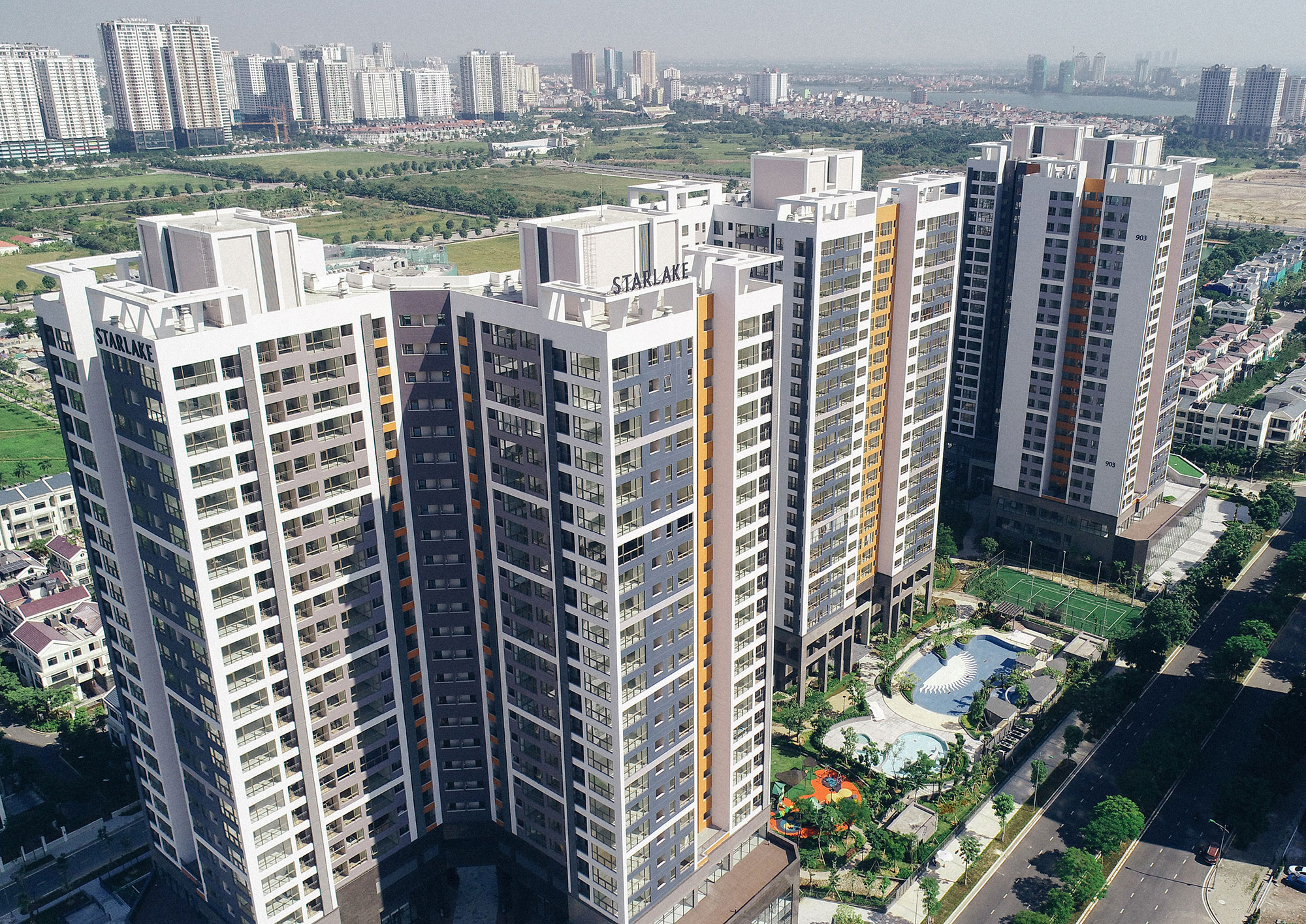
Vibe: Newer planned development in the Tay Ho district / west of West Lake. Modern apartments, family-and-professional appeal, hospitals and schools embedded. Cost: High. Who it suits: Higher-earning Americans, families wanting newer modern infrastructure. Tradeoff: Less traditional Hanoi character; ongoing development means construction noise.
Vinhomes Riverside

Vibe: Suburban-style development east of the river, with houses, villas, lakes, and a planned-community feel. Cost: Mid-to-high for houses. Who it suits: Families specifically wanting suburban-style space; less central. Tradeoff: Car/Grab dependency; long commute to central Hanoi.
Mỹ Đình / Nam Từ Liêm
Vibe: Office and residential district in southwest Hanoi, with Korean/Japanese/international residential pockets, modern apartment buildings, the My Dinh stadium and convention area. Cost: Mid. Who it suits: Americans working at offices in this area, those wanting modern apartments at reasonable prices. Tradeoff: Far from the historic core and traditional Hanoi atmosphere; more office-and-mall daily life.
For most first-time American arrivals, the practical default is Tây Hồ / West Lake, with Ba Đình as the calmer central alternative and Trúc Bạch as the smaller-scale option. Families with kids at UNIS often land in Ciputra; families at BIS or Concordia may live elsewhere. Budget-conscious longer-term residents often end up in Đống Đa, Hai Bà Trưng, or Cầu Giấy.
Housing Reality in Hanoi
Housing in Hanoi is not just about price. It is about air quality (apartment sealing, filtration capacity), noise, dampness, commute, building management, and whether the neighborhood fits your daily routine.
Serviced apartments vs local apartments is the first big decision. Serviced apartments (in Tây Hồ, Ba Đình, parts of Hoàn Kiếm) include full furnishing, weekly cleaning, on-site management, often gym and pool access, English-language management, and rent in the $800–$2,500+/month range. Local apartments — typically smaller, less Western-friendly furnishings, less management infrastructure, often Vietnamese-speaking landlords — rent for $300–$800/month for similar size in less central neighborhoods.
Villas and gated communities are the standard for families — Ciputra, Vinhomes Riverside, and other developments offer 3-4 bedroom houses or villas with yards, pools, and gated security at $2,500–$8,000+/month.
Furnished apartments are the default for foreigners. Most rentals come fully furnished, including kitchen appliances, washing machine, and AC units in every room.
Older buildings have specific issues. Maintenance varies. Plumbing surprises happen. Elevators in older buildings can be slow or unreliable. Ventilation is often poor — meaningful in a city with serious air quality issues, because indoor air quality can sometimes be worse than outdoor without proper sealing and filtration.
Dampness and mold risk is a real Hanoi factor, especially during spring (the "rainy season" / "drizzle season" of February–April that brings persistent humidity and cool damp conditions) and summer monsoon months. Look carefully at any apartment for visible mold spots, smell carefully for that characteristic damp-old-paper smell, and check the building's ventilation. Spring in northern Vietnam is famous locally for damp clothes that won't dry and electronics that develop condensation. Quality apartments handle this better than older buildings.
Noise, construction, and alley access vary sharply between buildings. The famous Hanoi "alley" (ngõ) housing — buildings accessed by narrow lanes off main streets — can be quiet and atmospheric or chaotic and motorbike-dense depending on the specific lane. Walk it at multiple times of day before committing.
Lease terms typically involve 12-month contracts with 2 months security deposit plus 1 month advance rent. Shorter leases exist at premiums in serviced apartments. Verify all paperwork is properly documented; informal rentals can create immigration registration issues.
Apartment quality variation is wide. The same nominal price in Tây Hồ can buy a modern serviced apartment in a well-managed building or a worn-out older flat in a building with maintenance issues. Walk the unit, check the AC, check the water pressure, check elevator reliability, check filtration capability, walk the street and the alley.
The most common American mistake is choosing housing based on photos and rent rather than on practical conditions. In a city with serious air quality and humidity issues, building quality matters more than newcomers realize.
Remote Work, Internet, Cafés, and Everyday Convenience
For American freelancers, consultants, and remote workers, Hanoi can be one of the more interesting Asia bases — if you have the right legal status.
Visa-wise, Vietnam's e-visa has been available to citizens of all countries and territories since August 15, 2023, valid for up to 90 days with multiple entry. This makes short-term and exploratory stays workable. For long-term living, the picture is more nuanced. Vietnam does not currently have a dedicated, well-established digital nomad visa equivalent to Thailand's DTV; Americans staying long-term typically rely on combinations of e-visa extensions, business visas (DN), investor or work permit-tied visas, or family-sponsored visas. Working for a Vietnamese employer or providing services to Vietnamese customers requires a proper work permit under Decree 219/2025/ND-CP, which regulates foreign workers, work permits, renewals, revocations, and exemptions. Working remotely for non-Vietnamese clients on a tourist e-visa is a legal gray area — verify your specific situation with Vietnam Immigration, a qualified immigration attorney, or your employer's legal counsel. This is not legal advice.
If you have the right legal status, day-to-day mechanics are strong. Fiber internet (Viettel, FPT, VNPT) at 100–500 Mbps runs $8–$25/month. Mobile 5G is widely available and dirt cheap by U.S. standards. Power reliability is generally good with occasional outages.
Café work culture is one of Hanoi's strongest assets for remote workers. Unlike Bangkok or many European cities where cafés tolerate work, Hanoi cafés actively expect it. The Avocado, Tranquil, Cong Caphe, Loading T Cafe, The Hanoi Social Club, Cuoi Cung Coffee, and dozens of independents in Tây Hồ and Hoàn Kiếm welcome laptops for hours. Many have multiple floors, power outlets, and reliable Wi-Fi. The café-as-coworking pattern is more natural here than anywhere else I've worked in Asia.
Coworking spaces exist (Toong has multiple locations, Up Co-Working, CirCO, Dreamplex) but are less essential than in cities with weaker café cultures. Day passes typically $5–$15; monthly memberships $80–$250.
Time zone tradeoffs are real. Hanoi runs UTC+7 — 12 hours ahead of New York (11 during daylight saving), 15 hours ahead of San Francisco. East Coast clients map onto Hanoi evenings; West Coast clients mean late-night calls. For Americans needing daily synchronous U.S. team overlap, the time difference is genuinely demanding.
Daily errands are smooth. Grab handles transport and food delivery. Shopee, Lazada, and Tiki cover e-commerce. Local supermarkets and the K-Market / Annam Gourmet imported grocers cover supplies. Banking can be friction-heavy depending on visa status — verify your bank account options before committing.
Healthcare and Everyday Services
Hanoi's healthcare reality is more limited than Bangkok's but better than newcomers fear. The major international and private hospitals include Vinmec International Hospital (Tây Hồ and Times City), Hanoi French Hospital (international standards, French-Vietnamese partnership), Family Medical Practice, Raffles Medical Hanoi, and Hanoi International Hospital. These institutions employ English-speaking specialists and offer care at substantial discounts to U.S. pricing.
For complex specialist care — particularly oncology, advanced cardiology, neurology, or specific surgeries — many international residents travel to Bangkok (Bumrungrad, Samitivej) or Singapore. Hanoi private healthcare is solid for primary care, common procedures, and most emergencies, but specialist depth is more limited than major regional medical hubs.
Insurance planning is essential. Most American long-term residents use one of three options:
Local Vietnamese private insurance (Bao Viet, Liberty, Pacific Cross Vietnam): $400–$2,000+/year depending on age and coverage.
International expat insurance (Cigna Global, Allianz Worldwide, IMG, William Russell): $1,500–$10,000+/year depending on age and coverage geography.
Employer-provided insurance: international school teachers and corporate transferees often have substantial coverage.
Insurance rates rise sharply with age, and pre-existing conditions affect both pricing and coverage.
Public healthcare is generally not where international residents go — local public hospitals are crowded, language barriers are real, and the experience is significantly different from private international hospitals.