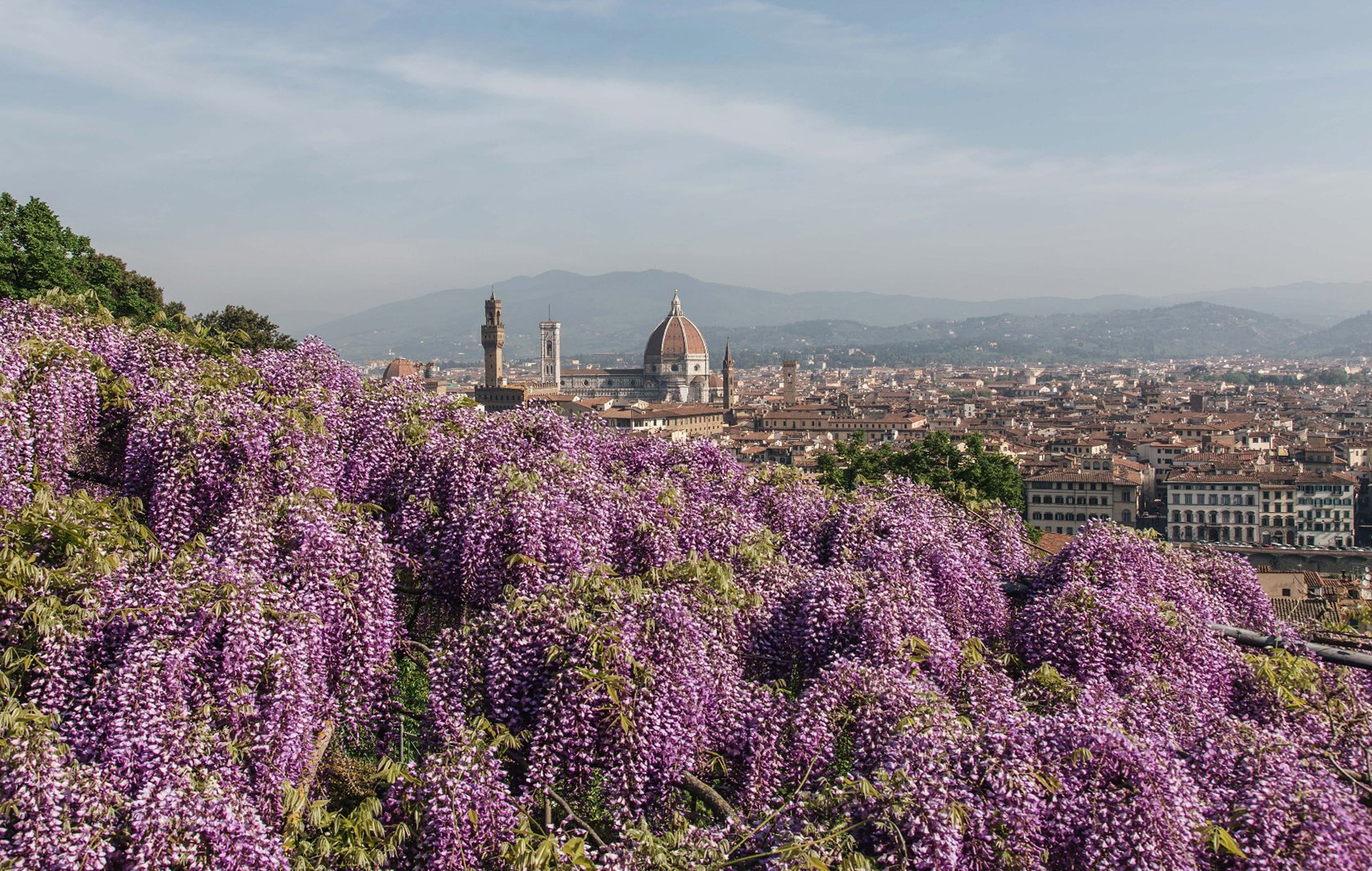
Living in Florence as an American: Cost, Neighborhoods, Pros and Cons
My First Honest Impression of Florence
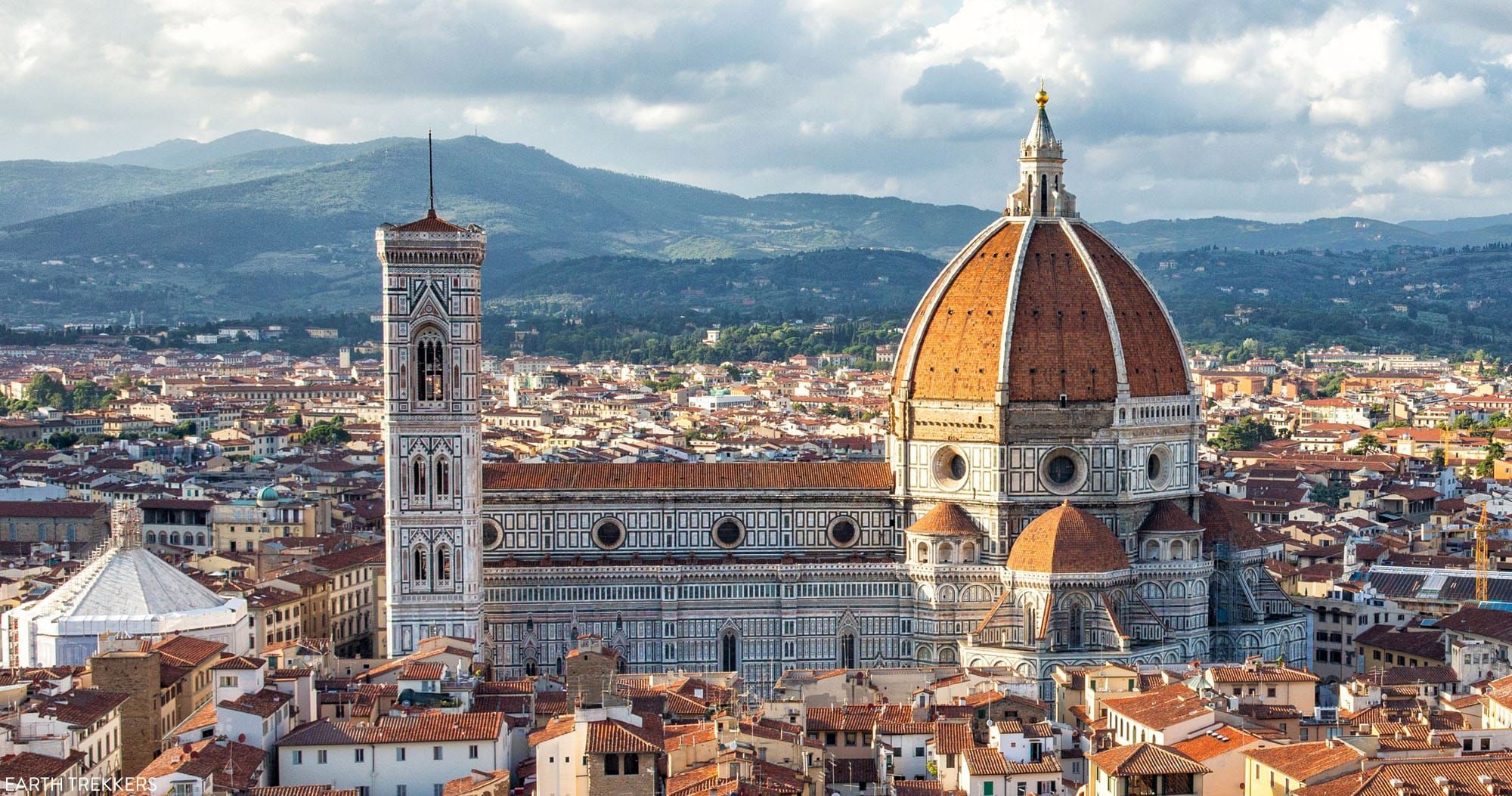
What surprised me about Florence is how small it feels, and how much that smallness shapes daily life. From an American point of view, the city's compact scale is part of the appeal — the historic center is roughly 505 hectares bounded by remnants of 14th-century walls, and you can walk from one side to the other in 30 minutes. The Duomo, the Uffizi, the Pitti Palace, Santa Croce, the Ponte Vecchio, the Boboli Gardens — these aren't destinations you plan trips to, they're just part of your radius. After a month, you stop photographing the Duomo and start noticing how the light hits the river in October.
But Florence is also not a fantasy you walk into. Recent Comune di Firenze data places the resident population around 363,000–364,000, with roughly 58,800–59,000 foreign residents (about 16.2% of the population). It's a working Italian city of moderate size that happens to live inside one of the world's most important UNESCO-listed heritage areas (the historic centre has been a World Heritage Site since 1982). That heritage is the city's defining asset and its daily-life constraint. Tens of millions of visitors a year compress through the same streets where 100,000 residents are trying to buy groceries, go to school, and live their lives.
The adjustment many Americans will feel first is that Florence operates at smaller-city scale in ways that aren't always obvious from a visit. The local job market is modest. The English-speaking community is real but more student-and-creative driven than corporate. The dating pool is smaller than Rome's or Milan's. Public transport is good for the city's size but doesn't include a metro. And the rental market in the historic center has been reshaped by short-term tourism rentals to a degree that has prompted the city to take action — including specific measures against self check-in keyboxes in holiday rental properties as part of broader steps to address overtourism.
The honest first impression: Florence is one of the most rewarding Italian cities to live in for the right American, and one of the most limiting for the wrong one. The Renaissance is just the backdrop. The question is whether the daily life works for you.
What Daily Life in Florence Actually Feels Like
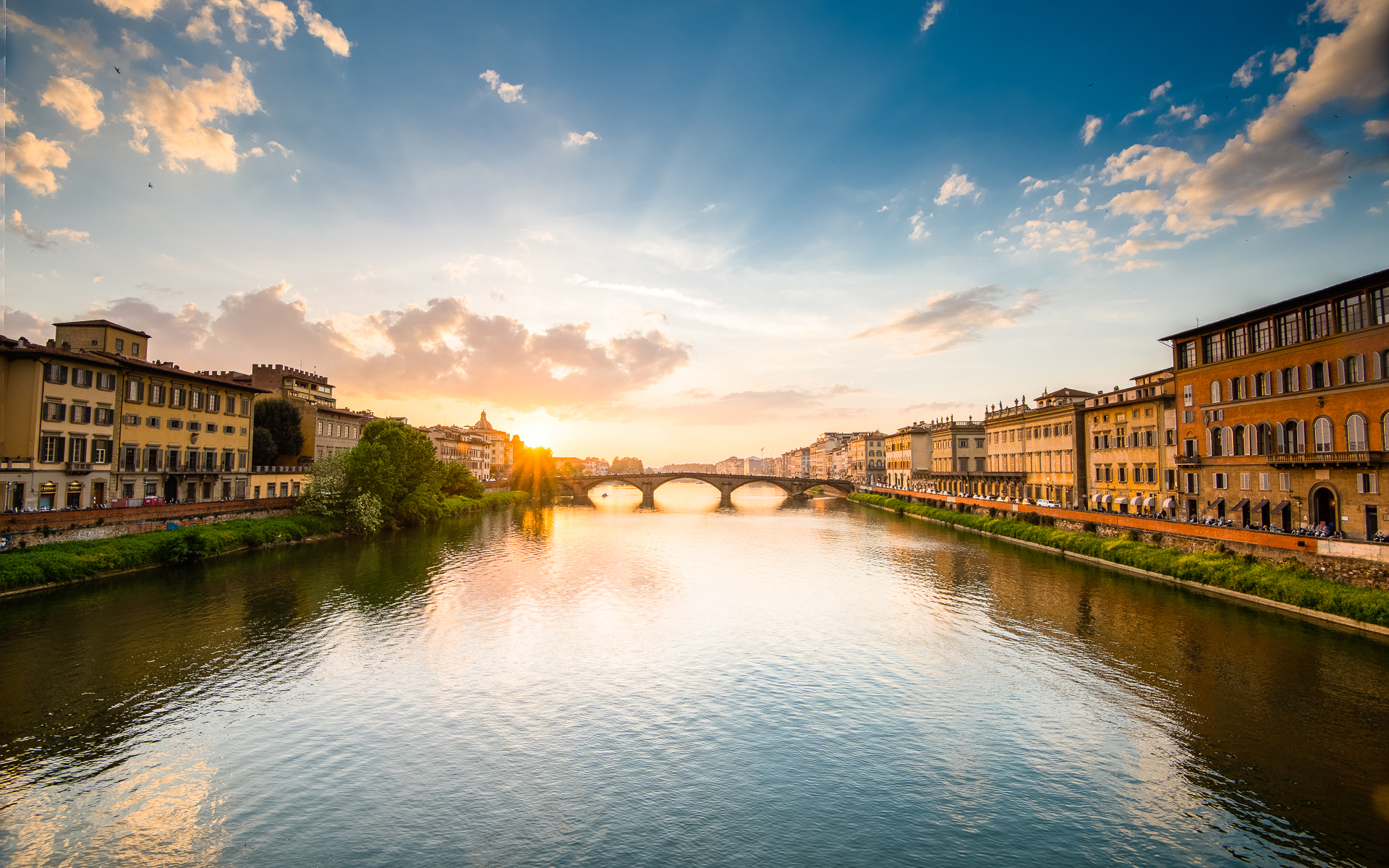
Daily life in Florence is built around three things: your walking radius, your neighborhood, and your relationship to the tourist tide. The texture is fundamentally different from Rome or Milan — slower, more contained, more deeply human.
Walking does the work that public transport does in larger cities. The historic core is small enough that residents move on foot for most daily errands. From an American point of view, this is one of the most genuine quality-of-life upgrades the move offers. You don't think about transit timing because you don't need it for the things you do most.
The Mercato Centrale and Sant'Ambrogio Mercato structure how you actually shop. Florentines (and many long-term Americans) buy produce, fish, meat, and bread at the markets and use supermarkets only for boxed goods. The Mercato Centrale on the upper floor has become more visitor-oriented in recent years, but the ground floor is still a real working market. Sant'Ambrogio remains more local.
Cafés and wine bars are the daily structure. The Italian "bar" pattern applies — espresso at the counter, quick chat, leave. Wine bars and enoteche are the evening equivalent, especially in Oltrarno, San Frediano, and Santa Croce. Aperitivo culture is real here, though smaller-scale than Milan's industrial version.
Tourism pressure is the daily-life fact that defines living in Florence more than any other. The historic center carries the highest concentration of visitors of almost any Italian city per resident. Walking from Piazza della Repubblica to the Uffizi at 11 a.m. in June is moving through a crowd. Many restaurants in the central zone are priced for visitors and have menus translated into five languages. The lines at the major attractions never end. From an American point of view, the most important strategic decision in Florence is whether you live inside this dynamic (Centro Storico, parts of Santa Croce, around the Duomo) or adjacent to it (Oltrarno, San Frediano, Le Cure, Campo di Marte). Adjacent is where most long-term Americans end up after their first lease.
The slower rhythm is real and shapes everything. Lunch is unhurried — restaurants often close between roughly 3 p.m. and 7 p.m. Many shops close at lunchtime. Sunday quietness extends through much of the city. The Florentine work day ends earlier than Milan's. Service is friendlier than in northern Italy but slower than U.S. norms.
The frustrations stack up. Tourist crowds at unpredictable hours. Apartments that lack proper AC in a basin that traps summer humidity. The post office that takes an hour. The codice fiscale appointment that takes weeks to book. A package delivery that runs on its own schedule. The bus that doesn't quite arrive. The local job market that — outside of universities, fashion-leather industries, and tourism — is genuinely limited for non-Italian-speaking professionals.
Cost of Living in Florence for Americans
Florence is meaningfully cheaper than Milan and dramatically cheaper than U.S. coastal cities, but central rents have been pulled up by tourism pressure and short-term rental conversion. Treat the ranges below as approximate; verify against current listings before you commit.
Solo American remote worker budget
A solo American renting a one-bedroom in a livable central or near-central neighborhood, using a transport pass, eating well a few times a week, and going out socially typically lands in the €1,700–€2,800 per month range. Centro Storico, central Santa Croce, and the most desirable Oltrarno blocks push the upper end. Le Cure, Campo di Marte, parts of San Frediano, and Gavinana sit lower.
Couple budget
Couples in a one-bedroom or small two-bedroom usually run €2,400–€3,800 per month comfortably. Splitting fixed costs helps, and Florence's market doesn't punish couples as hard as Milan's.
Family budget
A family with one or two children needing a real two- or three-bedroom apartment, with private health insurance, occasional eating out, and modest travel, generally lands €3,200–€6,000+ per month. Campo di Marte, Le Cure, parts of Oltrarno away from the tourist core, and Gavinana are common family choices. International schools (the International School of Florence, the American International School, NYU Florence-related families, etc.) can add a substantial separate line item.
What usually costs more than Americans expect
Furnished rentals in central or scenic neighborhoods: convenience commands a real premium, amplified by the short-term rental alternative.
Air conditioning in older buildings: many lack proper systems, and summer humidity in the basin makes this a real issue.
Heating in winter: gas bills in older apartments aren't trivial, and centralized heating systems run on building schedules.
Restaurants in the tourist core: a casual meal in the Duomo zone can cost twice what the same meal costs in San Frediano or Le Cure.
Bureaucratic friction costs: codice fiscale, sworn translations, a commercialista, sometimes a relocation service for the first apartment.
Imported groceries: U.S.-style peanut butter, ranch, certain cereals, decent maple syrup.
Where Americans may save money compared with U.S. cities
Eating out outside the tourist core: a trattoria meal with wine in San Frediano or Le Cure runs €20–€35 per person.
Coffee and counter food: espresso at the counter is €1.10–€1.40; a focaccia or panino lunch is €4–€7.
Public transport: a monthly ATAF pass is dramatically cheaper than U.S. car ownership.
Healthcare: private insurance for healthy adults is a fraction of U.S. premiums.
Wine and produce at markets: high-quality at very fair prices, especially for Chianti and Tuscan basics.
Travel: trains across Italy (high-speed to Rome in ~1h30, Milan in ~1h45, Bologna in ~35 minutes) and budget flights from Pisa or Bologna across Europe.
Phone and internet: fiber + mobile bundles often €25–€45 per month combined.
Why neighborhood choice matters more than city averages
The same euros buy very different lives in different Florence neighborhoods. €1,400/month rents a small studio in Centro Storico (likely tourist-saturated, possibly short-term), a real one-bedroom in Oltrarno or San Frediano, a comfortable apartment in Le Cure or Campo di Marte, and meaningful space in Gavinana or Novoli. Neighborhood choice does most of the work — both for cost and for what your daily Florence actually looks like.
Best Neighborhoods in Florence for Americans and Expats

Centro Storico
Vibe: The historic core — Duomo, Uffizi, Piazza della Repubblica, Ponte Vecchio. Beautiful, central, walkable, photographed constantly. Cost: Very high. Who it suits: Americans on short-term stays, sabbaticals, or those who want maximum immersion in the postcard and have the budget for it. Tradeoff: Tourist density is permanent. Daily-life errands compete with foot traffic. Many "real" residents have moved out of the most central blocks. Most long-term Americans live one zone over.
Santa Croce
Vibe: Central, food-driven, anchored by the Basilica di Santa Croce and Sant'Ambrogio Mercato. Social, lively, historic but with real local life. Cost: Mid-to-high. Who it suits: Americans wanting central access with stronger neighborhood identity than the Duomo core. Strong fit for food-driven and culturally minded movers. Tradeoff: Some streets near the basilica are touristy; the Sant'Ambrogio side is more lived-in. Walk both before signing.
Oltrarno
Vibe: Across the Arno, anchored by the Pitti Palace, Boboli Gardens, and a rich tradition of artisans (leather, frames, paper, carpentry). More lived-in feel in parts. Cost: Mid-to-high; varies sharply. Who it suits: Americans who want character, artisan culture, and a less polished daily rhythm — writers, artists, designers, long-term residents. Tradeoff: Tourism has pressed in significantly over the past decade; some blocks (around Piazza Santo Spirito) are now very visitor-driven.
Santo Spirito
Vibe: Inside Oltrarno but with its own identity — anchored by the Piazza Santo Spirito with the Brunelleschi basilica. Social, creative, café and wine bar density, evening crowds. Cost: Mid-to-high. Who it suits: Americans wanting social Oltrarno with maximum piazza life on the doorstep. Tradeoff: Loud Thursday through Saturday nights. Apartments often small and old.
San Frediano
Vibe: Within Oltrarno, more local-feeling, artisan, food-driven, neighborhood-grounded. Has gentrified in the past decade but retains real residential life. Cost: Mid. Who it suits: Americans who want Florence beyond the postcard — strong food culture, real community, lower tourism pressure than the central Oltrarno blocks. Often the "should I have just moved here?" answer for Americans who started in Centro Storico. Tradeoff: Rising rents as the neighborhood's reputation has grown.
San Niccolò
Vibe: Small, scenic, anchored against the Arno and the hills leading up to Piazzale Michelangelo. Beautiful, quiet, atmospheric. Cost: Mid-to-high. Who it suits: Americans wanting one of the most beautiful daily-life settings in Florence — couples, writers, retirees. Tradeoff: Small inventory means limited apartment options; tourism pressure flows up from the river and Piazzale Michelangelo.
Santa Maria Novella
Vibe: Near the main train station — practical, mixed, varies block by block. Cost: Mid. Who it suits: Americans who travel frequently by train and want easy access; budget-conscious arrivals. Tradeoff: Some streets near the station feel transient and less polished than other parts of the historic center.
San Marco
Vibe: Student and academic, anchored by the University of Florence buildings and the Accademia (home of Michelangelo's David). Quieter than the Duomo core in some pockets. Cost: Mid. Who it suits: Graduate students, academics, Americans connected to art schools or universities, those wanting central access with student energy. Tradeoff: Some streets feel less polished; check the specific block.
Campo di Marte
Vibe: Residential, east of the historic center, anchored by the Campo di Marte stadium and a more local rhythm. Useful for families. Cost: Mid. Who it suits: Families, Americans wanting distance from the tourist intensity, longer-term residents prioritizing daily-life calm. Tradeoff: Farther from central life; transit matters more.
Le Cure
Vibe: Local, residential, north of the historic center, quieter, with strong food markets and neighborhood identity. Often described as "real Florentine living." Cost: Mid; lower than central options. Who it suits: Americans who want long-term normal daily life — families, writers, retirees, anyone tired of tourist friction. Tradeoff: Less central, less atmospheric than Oltrarno or Centro Storico.
Gavinana
Vibe: South of the river, residential, more local, practical. Beyond the central historic core. Cost: Lower. Who it suits: Americans needing more apartment for less rent; families. Tradeoff: Commute matters; less integrated into central life.
Novoli
Vibe: Modern, practical, university and business-oriented (home to the University of Florence's law and economics campuses), less romantic, more functional. Cost: Lower. Who it suits: Students, Americans on university or corporate assignments, those who actively want a non-historic Florence. Tradeoff: Doesn't feel like "Florence" in the traditional sense; far from the central walkability that defines living here.
For most first-time American arrivals, the practical defaults are Oltrarno (especially San Frediano), Santa Croce (especially the Sant'Ambrogio side), or Le Cure, depending on whether your priority is character, central access, or residential calm.
Housing Reality in Florence
Housing in Florence is one of the biggest filters for an American move. The question isn't only "Can I afford it?" — it's "Can I live normally in a city shaped by tourism?"
The basic facts that surprise Americans first: Florence apartments are generally smaller than U.S. norms (a "spacious" central one-bedroom is typically 50–70 m² / 540–750 sq ft), buildings are often old (some genuinely Renaissance-era, with all that implies — uneven floors, no elevators, plumbing surprises), kitchens are often compact, and many central apartments lack proper AC.
Furnished (arredato) vs unfurnished (non arredato): furnished is faster for newcomers but rents at a real premium. Many of Florence's most beautiful central apartments are furnished specifically because they were designed for short-term tourist or student stays. Unfurnished is cheaper but expects you to furnish entirely.
Short-term rental pressure has reshaped the historic center's housing stock substantially over the past decade. Many apartments that should be long-term housing are operating as Airbnb-style tourist rentals. The Comune di Firenze has taken specific measures against overtourism and holiday-rental friction, including action targeting self check-in keyboxes in holiday rental properties. The intent is to return more housing to the long-term market and reduce visitor pressure in the most affected zones. The realistic effect on rents in 2026 is still emerging; Americans moving now should plan for current conditions, not future ones.
Rental paperwork is real and very Italian:
A codice fiscale (Italian tax ID), essentially required for almost everything
Proof of income, typically three to four times the monthly rent
A deposit of one to three months
A registered contract with the Agenzia delle Entrate (verify the contract is properly registered, not "in nero")
Sometimes a guarantor or additional rent paid up front
Older buildings come with their own pattern. Centralized heating that runs on building schedules. Plumbing that surprises you. Walk-ups in five-story palazzi. Charm and friction are often the same wall.
The most common American mistake: prioritizing the photogenic neighborhood over the practical apartment. The beautiful palazzo with the photogenic shutters may have no working elevator, a fifth-floor walkup, no AC, and a kitchen built in 1968. All normal. All tradeoffs you should know before signing. Walk the building. Walk the street at night. Check elevator, heating, AC, water pressure, and natural light.
Remote Work, Internet, and Everyday Convenience
For American freelancers, writers, consultants, and remote workers, Florence can work — but it's important to be honest about what kind of move this is.
Florence works best for Americans with remote income from outside Italy. The local job market in Florence is modest. Outside of universities, the leather and fashion industries (Florence is a real center for these), tourism, and select international firms, the career market is small. Most Americans I know in Florence are not depending on local Italian employment for income — they're working remotely for U.S. clients, freelancing, writing, teaching, doing academic or cultural work, or are retirees. If you need a major-city career market, Florence is the wrong Italian city. Milan is the right one.
Visa-wise, Italy now has an operational Digital Nomad / Remote Worker Visa (since 2024 under Decree Law 4/2022 and Decree Law 79/2024). It's intended for highly qualified remote workers — freelancers, consultants, or employees of foreign companies who can work fully remotely. Recent guidance points to a minimum annual income around €28,000 net (three times the threshold for Italian healthcare contribution exemption), at least six months of prior remote-work experience, comprehensive health insurance (minimum €30,000 coverage), proof of accommodation in Italy, relevant qualifications, and a clean criminal record. Initial validity is one year, renewable. After arrival, applicants must apply for the Permesso di Soggiorno within 8 working days. Verify current requirements with the relevant Italian consulate — this is not legal advice.
If you have the right legal status, the day-to-day mechanics are solid. Fiber internet is widely available in Florence — major providers (TIM, Vodafone, Fastweb, WindTre) offer fast plans bundled with mobile typically in the €25–€45 per month range. Cell coverage is strong.
Coworking is growing for a city this size — Multiverso, Impact Hub Firenze, Nana Bianca, and a handful of independents cluster in Centro Storico, Oltrarno, and Novoli. Day passes typically run €15–€25; monthly memberships €150–€300.
Cafés are not laptop battlegrounds. Italian bar culture treats the bar as a quick stop, not a workspace. Some Oltrarno and San Frediano spots tolerate laptops for shorter stretches; traditional Florentine bars do not. Read the room.
Time zone tradeoffs are the same as anywhere in Europe: 6 hours ahead of New York, 9 ahead of San Francisco. East Coast clients map onto Florence afternoons cleanly.
Healthcare and Everyday Services
Italy's healthcare system (the Servizio Sanitario Nazionale / SSN) consistently ranks well by international indicators, and Tuscany's regional health service is generally considered one of the stronger systems in Italy. But access isn't automatic.
Public healthcare access in Italy is tied to legal residence and registration with the SSN. Foreign residents typically register at the local ASL office (in Florence, this falls under the Azienda USL Toscana Centro) once they have their residence permit (permesso di soggiorno) and residency confirmation. Registration produces a Tessera Sanitaria (health card), which gives access to GPs (medico di base), specialists, and hospital care.
For Americans on the Digital Nomad / Remote Worker Visa, comprehensive private health insurance with minimum €30,000 coverage is required for the visa itself and during the initial period. Many Americans maintain private insurance even after SSN registration for faster specialist access and English-speaking doctors. Private insurance from Italian providers (UniSalute, Generali, Allianz, RBM) for a healthy adult typically runs €50–€150 per month.
Practically, English-speaking doctors are findable in Florence — there's a meaningful international medical presence, particularly tied to the long-standing American student and expat community. Pharmacies are excellent and pharmacists are trained to advise on minor issues.
This is general information only, not legal or medical advice. Verify your specific situation with an immigration professional, a licensed insurance broker, or official Italian sources (the Ministero della Salute, Agenzia delle Entrate, your local ASL).
Getting Around Florence Without a Car

For Americans coming from car-dependent U.S. cities, Florence is one of the most liberating European cities for going car-free — though it's important to be clear about the city's transport limits.