Living in Dubai as an American: Cost, Neighborhoods, Visas, Pros and Cons
My First Honest Impression of Dubai
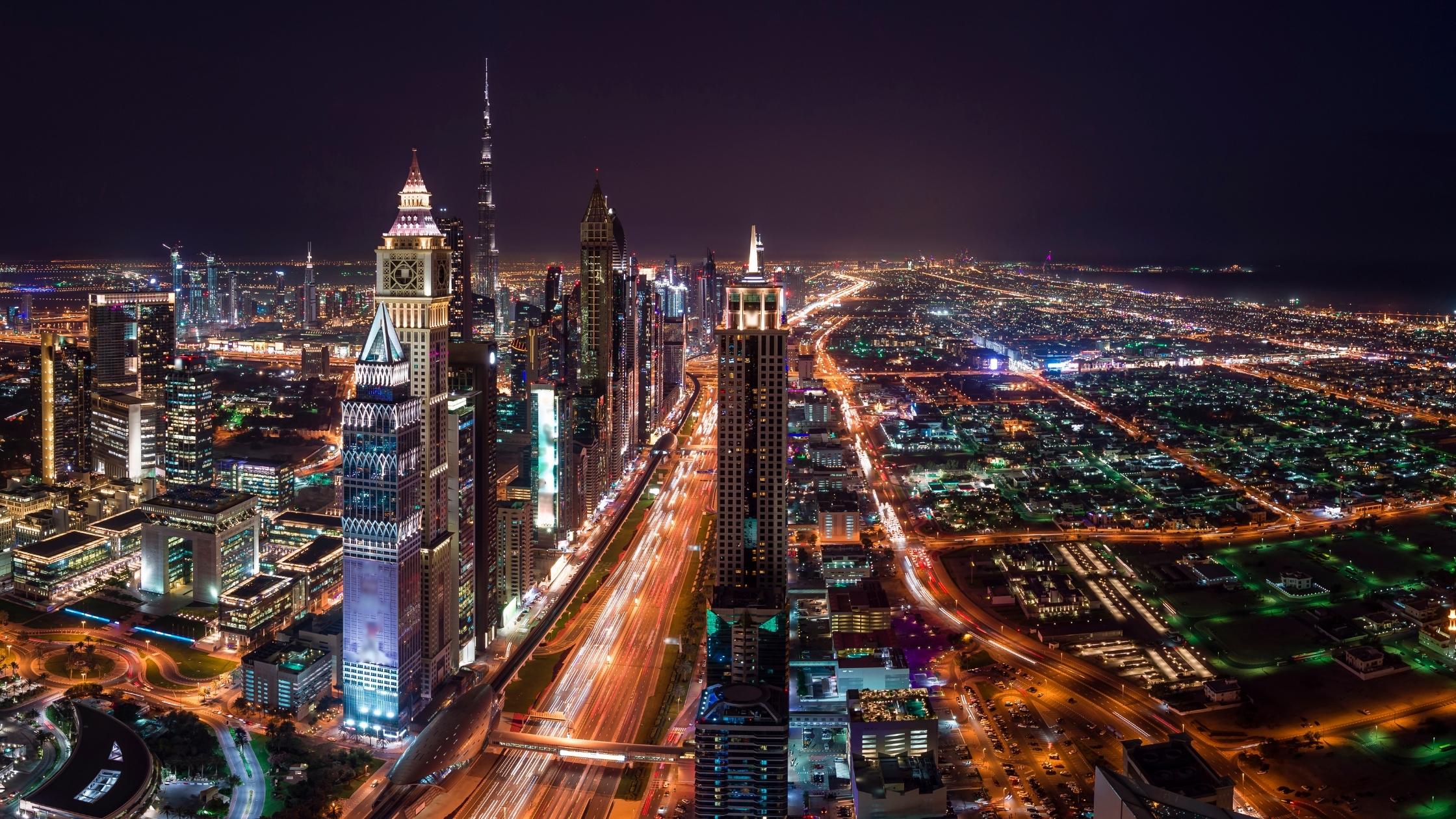
What surprised me about Dubai is how American it feels in operation — and how genuinely different it is in substance. From an American point of view, the surface-level adjustment is the easiest of almost any international move I've researched. English works everywhere in daily life. Roads, malls, supermarkets, hospitals, banks, telecom, schools — all operate to international standards. Safety is genuinely high. Service culture is polished. Apps cover daily logistics with Silicon Valley-level efficiency: Careem and Uber for transport, Talabat and Deliveroo for food, Noon and Amazon for everything else. After two weeks in Dubai, you can be operating like a resident — Emirates ID, bank account, apartment, gym membership, school enrollment, all in motion.
But Dubai is not New York or Miami with sunshine and no taxes. It's a fundamentally different kind of city operating under different legal, cultural, and economic logic. The UAE federation includes seven emirates, and Dubai is both an emirate and the city most people mean when they say "Dubai." The city's population passed 4 million residents in 2025 per Dubai Statistics Centre — and a substantial majority of those residents are foreign workers and expats. This is one of the most international cities in the world by population composition, but the country runs on UAE law, Islamic culture, and an economy built around being a regional hub. Dubai International Airport remained the world's busiest international airport in 2025 — that statistic tells you something true about why the city works: Dubai's product is connectivity, and it works because everything else is built to make that connectivity functional.
The adjustment many Americans will feel first is that Dubai's cost structure is more like London or Singapore than like Bangkok or Lisbon. Rent in the desirable neighborhoods (Dubai Marina, Downtown, JBR, Palm Jumeirah, Dubai Hills) competes with U.S. coastal city rent. International school tuition is real money — often AED 60,000–110,000+ ($16,000–$30,000+) per year per child at major schools. Cars are almost required outside the metro corridor. Health insurance is required and varies sharply by quality. Brunch culture, beach clubs, and the "Dubai lifestyle" social rhythm can quietly erase six-figure incomes if you don't structure your life around discipline.
The honest first impression: Dubai is one of the most rewarding international bases for Americans with the right income profile — and one of the most punishing for Americans who arrive thinking the tax-free part will do the heavy lifting. Dubai is not a cheap escape. It is a high-convenience, high-opportunity, high-consumption city. Knowing which version of the move you're making matters more here than in almost any other expat destination.
What Daily Life in Dubai Actually Feels Like

Daily life in Dubai is built around three things: your air-conditioned routine, your vehicle access (car, taxi, Metro, or some mix), and your neighborhood choice (which decides almost everything else).
Air-conditioned living is structural. From May through September, outdoor time during daylight is genuinely uncomfortable or dangerous in extreme heat days. Indoor life dominates — malls, offices, gyms, restaurants, homes, cars. The city is built for this: malls are climate-controlled cities (Dubai Mall and Mall of the Emirates function as social hubs, not just shopping). The summer pattern for most Americans is: morning gym before the heat, indoor work, indoor dining, evening walks once temperatures drop after sunset (still warm, but tolerable).
Car and taxi routines define most residents' mobility. Dubai is a planned, sprawling city with massive distances between major districts. Sheikh Zayed Road, the spine highway, can take 30 minutes to cross during peak. Many residents own cars (with the Salik electronic toll system charging AED 4 per gate crossing — these add up if you commute across multiple gates daily). Others rely on Careem, Uber, and taxis (cheap by U.S. standards — short trips in Marina run AED 15–30, longer trips AED 40–80). For Americans coming from car-dependent U.S. cities, this is familiar. For Americans coming from NYC or Boston, it's a real adjustment.
Metro-connected living is the practical alternative for many remote workers and professionals. The Dubai Metro Red Line runs along Sheikh Zayed Road from Centrepoint (near the airport) to UAE Exchange (Jebel Ali), connecting Dubai Marina, JLT, JBR (via the Tram), Business Bay, Downtown Dubai, and many key districts. The Green Line covers older Dubai (Deira, Bur Dubai, Healthcare City). Living in a Metro-walkable area like JLT or near Dubai Marina Metro can mean genuinely car-free daily life. The Blue Line is under construction — a 30 km project with 14 stations, broke ground in June 2025, targeted to open on 9 September 2029. Don't make housing decisions based on the Blue Line yet.
Malls, cafés, gyms, hotels, beaches, and delivery apps structure the daily texture. Malls aren't just shopping — they're social and lifestyle infrastructure. Hotel beach clubs (5* Palace Hotels, Atlantis, Five Palm, Bvlgari, FIVE JBR) are weekend ritual for many residents. Specialty coffee culture is strong — Dubai's third-wave café scene has matured rapidly. Gyms cluster around residential towers and offer everything from budget chains to high-end studios. Talabat, Deliveroo, and Careem Food handle delivery with five-star efficiency. Amazon.ae and Noon cover e-commerce.
Business networking is structurally part of social life, especially in DIFC, Business Bay, JLT, and parts of Marina. Events, conferences, member clubs (Capital Club, Soho House, Arts Club, Pacha Group venues), and industry meetups happen constantly. From an American point of view, this is one of Dubai's strongest features — the density of international professionals and the constant social-business mixing is genuinely productive for networking.
High safety perception is real. Violent crime against expats is genuinely rare. Streets are safe at all hours in most expat areas. This is one of Dubai's most underrated advantages, particularly for Americans coming from U.S. cities where urban safety has eroded.
Summer vs winter lifestyle is the most dramatic seasonal shift of any major expat destination. Winter Dubai (November–March) operates at full social and outdoor intensity. Summer Dubai operates in survival mode — many residents leave for July–August (the Eid Al Adha and school summer holiday period sees a real exodus of those who can afford it).
What feels easy: English-friendly environment; polished infrastructure; safe streets; efficient services; airport connectivity; international community; world-class restaurants and lifestyle amenities.
What feels expensive or artificial: rent in good areas; school fees; the "Dubai lifestyle" social pressure (brunches, beach clubs, premium gyms, designer everything); the constant low hum of consumption marketing; the fact that almost nothing in Dubai is "old" or organic — the city is roughly 50 years old and feels engineered.
The honest pattern: Dubai rewards Americans who arrive with stable high income, clear visa structure, financial discipline, and realistic expectations about what the city actually is (a polished global business hub, not a tropical paradise).
Cost of Living in Dubai for Americans
Dubai's cost structure surprises Americans in two ways. The tax-free part is real and meaningful for high earners. The lifestyle cost is also real and meaningful — Dubai can be as expensive as London or San Francisco in some categories. Treat the ranges below as approximate; verify against current listings before you commit.
Solo American professional budget
A solo American professional on a moderate-to-comfortable lifestyle — one-bedroom apartment in a good area (Marina, JLT, Downtown, Business Bay), car or Metro + ride-hailing combo, gym, occasional brunches and beach clubs, decent dining — typically lands in the AED 18,000–35,000 per month (~$5,000–$9,500) range. Below AED 15,000/month is possible with discipline (smaller apartment, less central, fewer brunches). Above AED 45,000/month is easy in Palm Jumeirah, Downtown luxury, or premium lifestyle choices.
Couple budget
Couples sharing a one-bedroom or small two-bedroom typically run AED 25,000–50,000/month (~$6,800–$13,600). Splitting fixed costs helps; Dubai's premium rental market still imposes real housing costs even for couples.
Family budget
A family with one or two children needing a real two- or three-bedroom apartment or villa, private health insurance, two cars (or one car plus ride-hailing), international school tuition, occasional travel, and Dubai lifestyle baseline typically lands in the AED 50,000–120,000+/month (~$13,600–$32,700+) range. International school tuition is the biggest variable — top schools (GEMS Wellington, Dubai American Academy, Dubai College, Repton, Dwight School Dubai, Brighton College) can run AED 60,000–110,000+ ($16,000–$30,000+) per year per child. Mid-tier schools run AED 30,000–60,000/year. Without international schools, family budgets compress meaningfully.
Remote worker / consultant budget considerations
Americans on the Virtual Working Programme need to understand that the visa has minimum income requirements — and that these requirements have been tightening. Recent regulatory changes have moved the minimum monthly income from USD 3,500 to USD 5,000 for some categories per joint ICP/GDRFA guidance, with health insurance coverage requirements increasing as well. Verify current requirements directly with GDRFA Dubai and ICP — this is not legal advice and the regulations are evolving. Practically, sustainable Dubai life for remote workers usually requires meaningfully more than the minimum income threshold — the threshold gets you the visa; the lifestyle costs determine whether you actually thrive.
What usually costs more than Americans expect
Rent in desirable areas: Marina, Downtown, JBR, Palm Jumeirah, Dubai Hills, and parts of DIFC and Business Bay rent at near-U.S.-coastal-city levels.
Annual rent payment structure: many Dubai rentals are paid in 1-4 cheques per year — single-cheque payments earn better rates but require significant upfront capital.
International school tuition: AED 30,000–110,000+/year per child.
DEWA utilities (electricity and water) plus cooling charges: summer cooling alone can run AED 1,000–3,000+/month for larger apartments.
Car costs: while gas is cheap, Salik tolls (AED 4 per gate), parking, and car payments add up.
Health insurance for self-employed or freelancers: employer-provided insurance is required for employees, but self-sponsored visa holders need to arrange their own coverage. Annual premiums can run AED 4,000–25,000+ depending on age, plan, and dependents.
Brunches, beach clubs, premium gyms: Friday brunches commonly AED 350–700+ per person; beach club day passes AED 250–500+; premium gyms AED 600–1,500+/month.
Imported groceries at premium grocers (Spinneys, Waitrose, Carrefour Hyper Market international aisles): meaningful premium over local equivalents.
Schooling-related extras: bus, uniforms, books, activities, KHDA-mandated supplemental costs.
Where Americans may save money compared with U.S. cities
Personal income tax: UAE doesn't levy it. For high earners, the federal-tax savings are substantial — but factor U.S. tax obligations separately.
Gas and fuel: dramatically cheaper than U.S. coastal cities.
Ride-hailing: Careem and Uber are much cheaper than U.S. equivalents.
Domestic help: housekeepers, nannies, drivers at fractions of U.S. cost (typical full-time housekeeper salaries are meaningfully lower than U.S. norms, though Dubai's sponsorship rules require formal arrangements).
Healthcare with good insurance: most routine care is well-covered and accessible.
Phone and internet: Du and Etisalat offer high-speed fiber + mobile bundles competitive with U.S. plans.
Asia and Europe travel: Dubai's airport hub status makes weekend trips to Mumbai, Istanbul, Cairo, Athens, the Maldives, Bangkok, or even Tokyo genuinely accessible.
Why income and lifestyle discipline matter more than averages
Two Americans on identical incomes in Dubai can have radically different financial outcomes. One lives in JLT in a one-bedroom near the Metro, takes Careem when needed, eats out twice a week, attends one brunch a month, and saves 40-50% of their income (tax-free). The other lives in Marina in a sea-view apartment, drives a leased premium SUV, attends weekly brunches and beach clubs, dines at premium restaurants, and saves nothing. The difference is rarely income — it's lifestyle structure. Dubai makes lifestyle inflation effortless.
Best Neighborhoods in Dubai for Americans and Expats
Dubai Marina
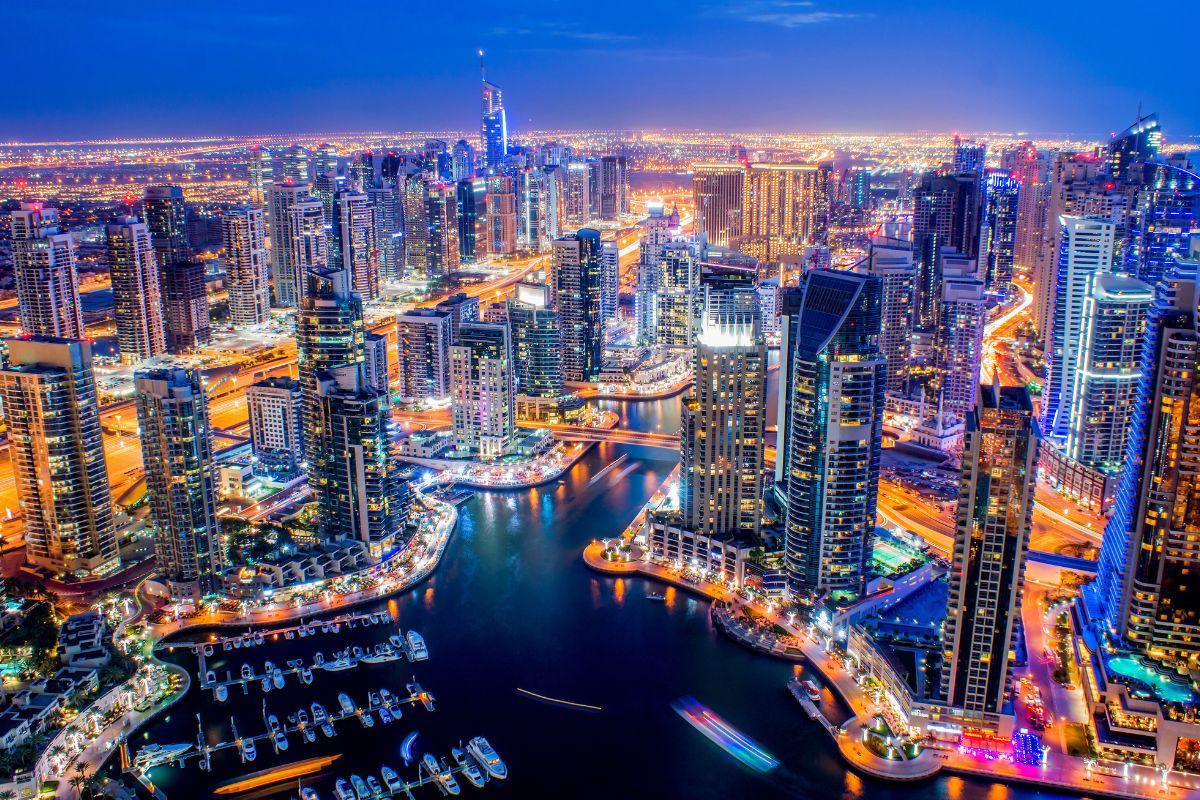
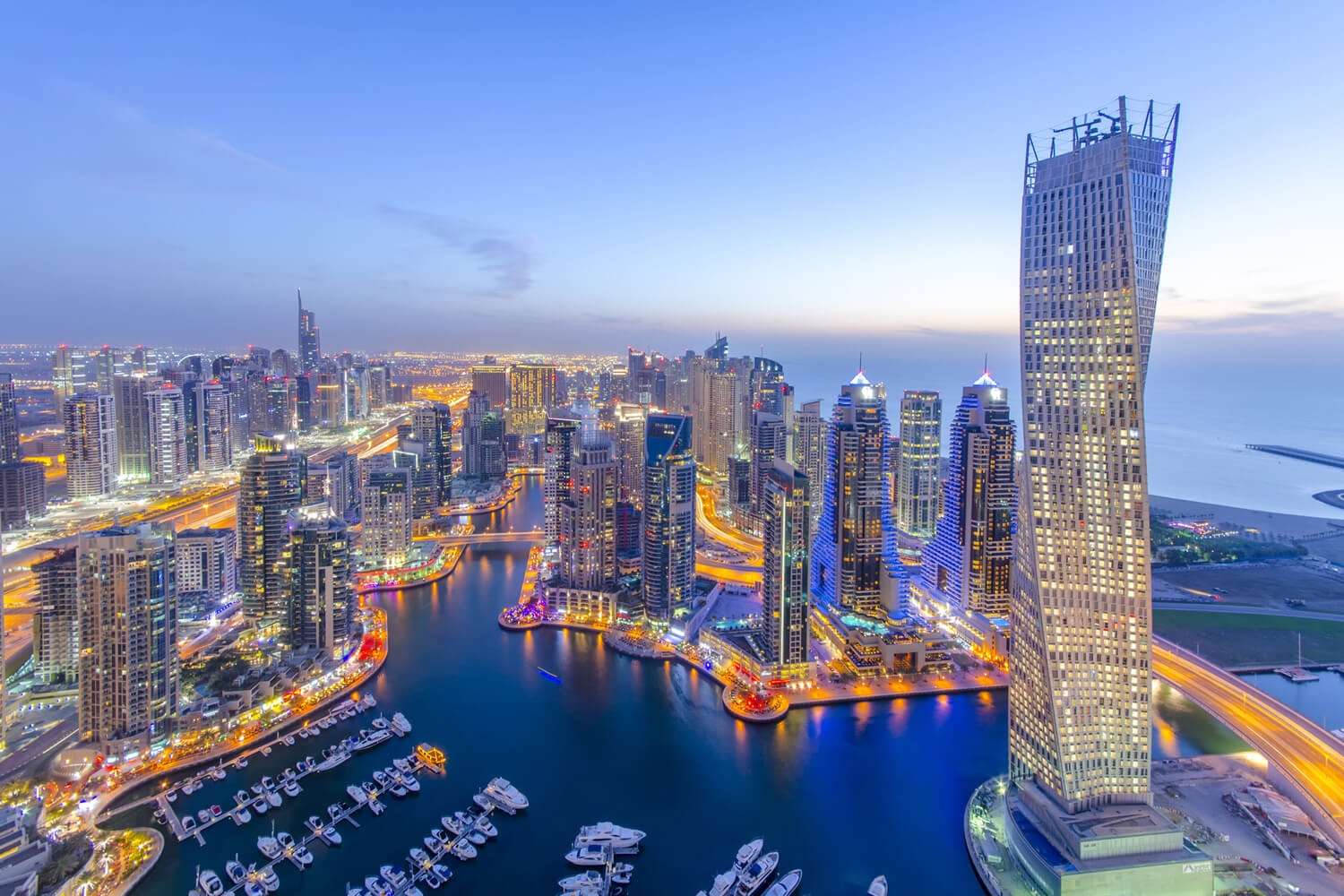
Vibe: Waterfront high-rise living anchored by the Marina Walk, expat-heavy, social, restaurant-dense. The classic first-arrival neighborhood for many Americans. Cost: High — one-bedrooms typically AED 95,000–160,000/year. Transport: Metro (Dubai Marina station), Tram (multiple stations), walkable within the Marina, easy taxi. Who it suits: First-time American arrivals, social professionals, couples, younger residents wanting waterfront energy. Tradeoff: Tourist density on weekends; traffic at peak; the "expat bubble" feel; rents have moved up significantly.
Jumeirah Lakes Towers (JLT)
Vibe: More practical and grounded than Marina, with the JLT Metro station, lakeside walking paths, towers with coworking and offices, dining, growing café scene. Cost: Mid-to-high — slightly cheaper than Marina for similar quality. Transport: Metro (DMCC and JLT stations), walkable within JLT, easy Marina access. Who it suits: Professionals wanting Metro-connected balance, remote workers, budget-aware Americans wanting central-ish lifestyle. Tradeoff: Less iconic than Marina; some buildings feel office-tower-residential mixed.
Jumeirah Beach Residence (JBR)
Vibe: Beachfront lifestyle, restaurant strip, hotel-dense, tourist-facing energy, beach immediately accessible. Cost: High. Transport: Tram connects to Metro; walkable along The Walk. Who it suits: Americans prioritizing beach access and tourist-area energy. Tradeoff: Tourist density; can feel transient; some buildings cater to short-term rentals.
Downtown Dubai
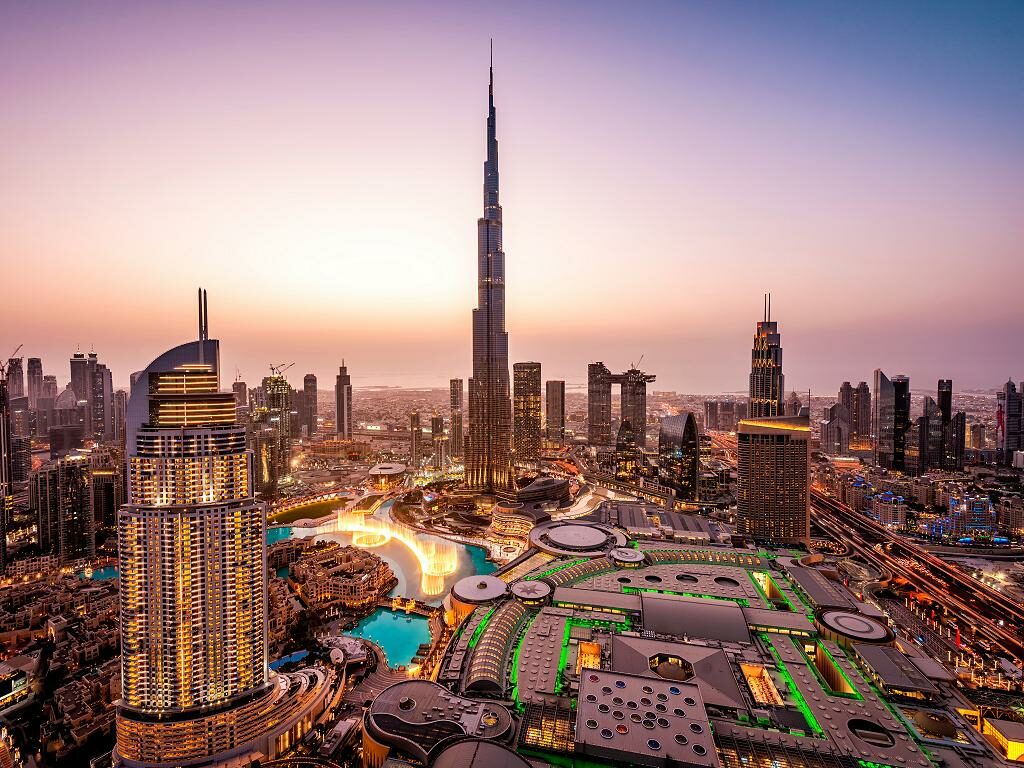
Vibe: The Burj Khalifa / Dubai Mall area — iconic Dubai, luxury, central, polished. The version of Dubai people imagine. Cost: Very high — among Dubai's most expensive. Transport: Metro (Burj Khalifa/Dubai Mall station), walkable within Downtown. Who it suits: Higher-income Americans wanting iconic central living, executives, those prioritizing prestige. Tradeoff: Among the most expensive areas; tourist-heavy; can feel curated.
Business Bay
Vibe: Office-and-residential mix, central, towers, growing dining and lifestyle scene, adjacent to Downtown and DIFC. Cost: High. Transport: Metro (Business Bay station), Bus, easy to most key districts. Who it suits: Professionals working in central Dubai, couples wanting urban access. Tradeoff: Traffic can be real; some buildings feel quieter at night.
DIFC (Dubai International Financial Centre)
Vibe: The finance and professional services hub — bankers, lawyers, consultants, sky-high lunch spots, museum-quality art galleries, exclusive member clubs. Cost: Very high. Transport: Metro (Financial Centre station), walkable within DIFC. Who it suits: American finance professionals, lawyers, consultants, executives wanting work-walkable lifestyle. Tradeoff: Most expensive area on the island for many cuts of housing; can feel sterile outside business hours.
Jumeirah
Vibe: The original luxury Dubai — villa lifestyle, beach access, historic (by Dubai standards) low-rise residential, embassies, Jumeirah Mosque, original Madinat Jumeirah area nearby. Cost: High for villas; varies by area. Transport: Car-dependent; some bus access. Who it suits: Families wanting villa lifestyle and beach proximity; established expat families. Tradeoff: Car-dependent; less walkable than tower districts.
Palm Jumeirah
Vibe: The iconic palm-shaped artificial island — resort-living, luxury villas and apartments, Atlantis, Five Palm, FAIRMONT, Bvlgari resort. Cost: Among Dubai's highest. Transport: Tram via the trunk; car essential for getting around the island. Who it suits: Higher-income Americans wanting resort-style living, beach-villa lifestyle, those with budget for the Palm tax. Tradeoff: Genuinely expensive; one road in/out can mean traffic; the iconic-living premium is real money.
Dubai Hills Estate
Vibe: Planned community by Emaar — villas, townhouses, apartments, Dubai Hills Mall, golf course, green spaces, polished new-build feel. Cost: Mid-to-high; villas command premiums. Transport: Car-dependent (no Metro station yet — though future expansion is planned). Who it suits: Family-oriented Americans wanting polished planned community; new-build housing preferences. Tradeoff: Car-dependent; can feel suburban-curated; rents have moved up as the community matured.
Arabian Ranches
Vibe: Established villa suburb anchored by golf and family community feel, schools nearby (JESS Arabian Ranches, Ranches Primary, others), spacious villas with private gardens and pools. Cost: Mid-to-high for villas. Transport: Car-dependent. Who it suits: Families wanting traditional villa suburb, established Dubai family living. Tradeoff: Genuinely car-dependent; far from central business districts.
Jumeirah Village Circle (JVC)
Vibe: Apartment-heavy, more affordable relative to premium zones, mixed quality across buildings, growing food and lifestyle scene. Cost: Mid — among Dubai's most affordable for newer apartment living. Transport: Car-dependent — not Metro-connected. Traffic at peak. Who it suits: Budget-conscious Americans wanting newer apartment living, first arrivals testing the city. Tradeoff: Traffic to central Dubai is real; building quality varies.
Al Barsha
Vibe: Practical central-ish area near Mall of the Emirates, mixed housing (apartments and villas), local-international flavor. Cost: Mid; good value pockets. Transport: Metro (Sharaf DG, Mall of the Emirates, Mashreq stations), bus, easy taxi. Who it suits: Budget-conscious Americans wanting practical access, families wanting villa-but-affordable options in some areas. Tradeoff: Less polished than Marina or Downtown; varies sharply by sub-area.
Barsha Heights
Vibe: Apartment-heavy area near Tecom and Internet City, practical, central, growing dining scene. Cost: Mid. Transport: Metro (Dubai Internet City station), near Mall of the Emirates. Who it suits: Budget-conscious professionals working in Tecom/Internet City/Media City offices, remote workers wanting Metro access at lower cost than Marina. Tradeoff: Less amenity-rich than Marina; some buildings older.
Deira
Vibe: Older Dubai — the historic trading area along Dubai Creek, Gold Souq, Spice Souq, traditional markets, dense Indian/South Asian/Arab community feel. Cost: Low to mid for Dubai. Transport: Metro (multiple stations), abra (water taxi) across the Creek. Who it suits: Budget-conscious Americans wanting cultural depth, those interested in historical Dubai, lower-cost living. Tradeoff: Less polished than expat-corridor areas; smaller international community; older infrastructure in some sections.
Bur Dubai
Vibe: Historic area on the other side of Dubai Creek — Al Fahidi Historic District, museums, traditional architecture, dense South Asian community, Karama nearby for affordable shopping. Cost: Low to mid for Dubai. Transport: Metro (Al Fahidi, Burjuman stations), close to historic core. Who it suits: Budget-conscious Americans, those wanting cultural Dubai over luxury Dubai. Tradeoff: Smaller expat community; different feel than Marina.
Mirdif
Vibe: Family-oriented, quieter, mix of villas and apartments, closer to the airport side, schools and family infrastructure. Cost: Mid; better value for space. Transport: Car-dependent. Who it suits: Family-oriented Americans wanting quieter villa life, those prioritizing budget over central access. Tradeoff: Car-dependent; far from central business and beach areas.
Dubai Silicon Oasis
Vibe: Tech/education-oriented planned area, suburban feel, value pricing, growing. Cost: Mid; better value. Transport: Car-dependent. Who it suits: Tech workers, families wanting newer apartments at lower prices. Tradeoff: Far from central lifestyle areas; can feel isolated.
Dubai Creek Harbour
Vibe: Newer waterfront development by Emaar — modern apartments, future Dubai Creek Tower area, ongoing development. Cost: Mid-to-high in newer towers. Transport: Car-dependent currently; future Metro extension planned. Who it suits: Americans wanting modern new-build, future-facing investment in the area. Tradeoff: Still developing; current daily-life infrastructure thinner than established areas.
Dubai South
Vibe: Airport-adjacent area around Al Maktoum International (DWC), built around future growth and Expo legacy infrastructure. Cost: Lower per square meter than central Dubai. Transport: Car-dependent; future Blue Line extension planned. Who it suits: Americans working near DWC, long-term investors betting on the area's growth. Tradeoff: Far from current central Dubai; still developing.
For most first-time American arrivals, the practical defaults are Dubai Marina, JLT, or Downtown Dubai, depending on whether your priority is social waterfront energy, Metro-connected balance, or iconic central living. Families more typically land in Dubai Hills Estate, Arabian Ranches, Jumeirah, or Mirdif depending on school choice and budget. Budget-conscious arrivals often start in JVC, Barsha Heights, or Al Barsha.
Housing Reality in Dubai
Housing in Dubai is not just about rent. It is about commute, AC costs, car access, building quality, parking, school route, Metro access, and how much lifestyle inflation you accept.
Apartments vs villas is the first major decision. Most singles and couples live in apartments (towers in Marina, JLT, Downtown, Business Bay, JBR, JVC). Most families with kids live in villas or larger apartments in Dubai Hills, Arabian Ranches, Jumeirah, Springs, Meadows, or Mirdif.
Furnished vs unfurnished matters. Most Dubai apartments are unfurnished (unlike many Asian markets), and you'll need to furnish entirely — beds, sofas, dining, kitchen appliances, washer/dryer, sometimes even light fixtures. Budget for AED 15,000–60,000+ for furnishing a one-bedroom depending on quality. Furnished apartments exist but command 20–40% rent premiums.
Ejari registration — tenancy contracts in Dubai must be registered with Ejari (the official tenancy registration system administered by the Real Estate Regulatory Agency). This registration is what gives your tenancy legal protection and is required for getting your DEWA connection, Emirates ID, school enrollment, and most other services. Verify your landlord registers Ejari properly.
Rent payment structures are different from U.S. norms. Most landlords prefer annual payment in 1–4 cheques (1 cheque earns the best rate; 4 cheques means quarterly payments). This requires significant upfront capital. Plus typical 5% deposit, 5% agent commission, AED 200+ Ejari fees, AED 2,000+ DEWA deposit. Budget AED 20,000–40,000+ in move-in costs beyond the rent itself.
Cooling and utilities: DEWA covers electricity and water. Many newer developments have additional district cooling charges (Empower, Tabreed) billed separately — these can run AED 700–3,000+/month in summer for a one-bedroom and substantially more for larger units. Verify the cooling system before signing a lease.
Building amenities are real selling points — pools, gyms, security, parking, lobbies are standard in towers and command real rent value.
Parking matters more than newcomers realize. Most towers include 1 parking space; some include 2. Additional parking is usually paid or unavailable. Street parking in central areas is metered and limited.
Traffic and commute reality is structural. Sheikh Zayed Road peak (7-10 AM, 5-8 PM) can be brutal. Living within Metro walking distance changes everything — JLT to DIFC by Metro takes 15-20 minutes; the same trip by car at peak can be 40-60 minutes.
Metro corridor vs car-dependent communities is the biggest mobility decision. Marina-JLT-Barsha-Downtown-Business Bay-DIFC are Metro-connected. Dubai Hills, Arabian Ranches, JVC, Mirdif, Jumeirah villas, parts of Palm Jumeirah are car-dependent or require Tram + transfer. The car-dependent choice is fine if you've factored car costs in; it's a real friction otherwise.
School-location decisions for families often dictate housing choice. With school commutes in Dubai potentially eating 60-90 minutes daily in school buses or driver-driven cars, many families pick housing based on the school first, neighborhood second.
The most common American mistake is choosing housing based on weekend-tourist Dubai (Marina sunset views) rather than daily-life Dubai (the commute to work, school, gym). Walk your prospective neighborhood at multiple times of day and at different points in the week before committing.
Remote Work, Business, Internet, and Everyday Convenience
For American professionals, founders, consultants, and remote workers, Dubai can be one of the most strategically valuable bases on the table — if the income math works.
Visa-wise, Dubai offers several pathways relevant to Americans:
Virtual Working Programme / Remote Work Visa (1-year residence visa for eligible remote workers). Official GDRFA Dubai requirements as currently listed: passport valid for at least 6 months, proof of working for an entity outside the UAE with work performed remotely, monthly income of at least USD 3,500 (with regulatory updates moving this threshold higher in some categories — verify current requirements directly), valid UAE-coverage health insurance, and a recent personal photo. Recent ICP/GDRFA regulatory updates in 2026 have tightened some requirements — the income threshold and insurance requirements have been increasing in some categories. Verify current requirements directly with GDRFA Dubai or Invest in Dubai before applying. This is not legal advice.
UAE Golden Visa: 5-10 year renewable residence visa for investors, entrepreneurs, exceptional talents, scientists, executives, and specialized professionals meeting specific eligibility criteria. The Golden Visa offers genuine long-term stability.
Employment Visa: Sponsored by your UAE employer for those with formal job offers.
Investor Visa / Free Zone company setup: For Americans establishing UAE businesses through free zones (Dubai Multi Commodities Centre, Dubai Internet City, JAFZA, Dubai Healthcare City, IFZA, etc.). Free zones offer 100% foreign ownership and various visa structures.
Family sponsorship: For Americans with UAE-resident family.
If you have the right legal status, day-to-day mechanics are excellent. Fiber internet (Etisalat e&, du) at 250 Mbps to 1 Gbps runs AED 350–700/month. Mobile 5G is widely available, premium plans run AED 100–300/month. Power reliability is excellent.
Coworking and business centers are mature. WeWork, Hub71 (Abu Dhabi), Letswork, Astrolabs, Nasab, A4 Space, multiple options in DIFC and across the Marina/JLT corridor. Day passes AED 50–200; monthly memberships AED 750–3,500 depending on tier and location.
Banking and Emirates ID are necessary for most services. Emirates ID is your residency identification card, required for almost everything — bank account, phone contract, lease, school enrollment, healthcare. You apply during your residency visa process. Banking can be friction-heavy until you have residency — Emirates NBD, ADCB, Mashreq, FAB are major options.
Time zone tradeoffs are real but generally favorable. Dubai runs GST (UTC+4) — that's 8 hours ahead of New York (9 during U.S. daylight saving) and 11 hours ahead of San Francisco. For East Coast U.S. clients, Dubai afternoons map to U.S. mornings — workable for synchronous calls. For Europe, Dubai is perfectly positioned (1-2 hours ahead of Western Europe). For Asia clients, even better.
Daily errands are unusually efficient. Talabat, Deliveroo, Careem Food for delivery. Noon, Amazon.ae, Carrefour for e-commerce. Banking apps are excellent. Government services (smart apps for everything from RTA to DEWA to GDRFA) work well.
Healthcare and Insurance in Dubai
Dubai's private healthcare system is among the strongest in the Middle East, but access depends entirely on insurance.
Employer-provided insurance is required for employees in Dubai. The Dubai Health Insurance Law requires employers to provide health insurance coverage for all their employees. Quality varies dramatically — entry-level plans cover basic care at limited network hospitals; premium plans (Daman, Bupa Global, AXA Gulf, MetLife, Cigna) cover top private hospitals and international care.
For dependents and self-employed people, you must arrange your own insurance. Premiums vary sharply by age, plan, and dependents. A healthy adult might pay AED 4,000–15,000/year for a solid plan covering top hospitals. Family coverage and older Americans pay substantially more — AED 25,000–60,000+/year for premium family plans.
Major private hospitals include Mediclinic City Hospital, Mediclinic Parkview, American Hospital Dubai, Saudi German Hospital, Emirates Hospital, NMC Royal Hospital, King's College Hospital London Dubai. These offer English-speaking specialists and care comparable to U.S. private hospitals at meaningfully lower prices for those with appropriate insurance.
Pharmacies are widely available and convenient (Aster, BinSina, Life Pharmacy, others), with most medications accessible. Some U.S. prescriptions require local prescriptions; follow UAE law and consult professionals for anything serious.
Specialist care is generally strong in Dubai for most needs. For some highly specialized care, some residents still travel to London, Bangkok, or Singapore, though Dubai's specialist depth has improved meaningfully.